This page is a relocation summary written by an advanced AI
It is not a personal opinion piece written by a human. An AI gathered official information published on the internet — municipal and national statistics, the Japan Meteorological Agency, railway companies, property portals — and rebuilt it into a form that someone considering a move can read and act on. Every figure carries a source link and the date it was checked, so please confirm anything that matters to you against the original document. Rules and prices change. Always check the latest information yourself before you sign anything.
Move to Hadano
From Hadano Station to Shinjuku it is 1 hour 13 minutes and ¥692, on a single Odakyu rapid express with no change. A morning commuter pass costs ¥16,970 a month. Change to a limited express at Sagami-Ono and it is 1 hour 6 minutes at best. To Yokohama it is 1 hour 4 minutes and ¥617; to Odawara 22 minutes and ¥293. Population 161,110, area 103.76 square kilometres.
🔴 And the water of Hadano came first in Japan in the Ministry of the Environment's vote on the 100 finest waters. In the city's words, "in the vote on the 100 finest waters held by the Ministry of the Environment in Heisei 28, 'the delicious water of Hadano, the drops of Tanzawa' came first in Japan in the 'wonderfully delicious water' category". It is the only typical basin in the prefecture, and the water of Tanzawa collects in it.
Population
161,110 people
75,219 households, 1 August 2026 (estimated population)
Homes for sale
105 listings
¥7,980,000– / median ¥23,800,000
To Shinjuku
1 hr 13 min
Odakyu, 0 changes, ¥692 (rapid express)
Commuter pass to Shinjuku
¥16,970
a month (3 months ¥48,370, 6 months ¥91,640)
Residential land price
¥82,600/m²
+1.0% on the year / 37% of the Kanagawa Prefecture average
In the city's words — "Hadano City lies in the west of central Kanagawa Prefecture, bordering Isehara City to the east, Matsuda Town and Oi Town to the west, Nakai Town and Hiratsuka City to the south, and Atsugi City, Kiyokawa Village and Yamakita Town to the north" and "it lies about 60 kilometres from Tokyo and about 37 kilometres from Yokohama; to the north runs the Tanzawa massif, called the roof of Kanagawa Prefecture, and to the south the Shibusawa hills run east to west, forming the only typical basin in the prefecture". Its area of 103.76 square kilometres is 5th of the 19 cities in the prefecture. The highest point is Mount To at 1,490.9 metres and the lowest the Tsurumaki district at 16.2 metres — a difference of 1,474 metres within one city.
Being a "basin" decides everything about this townThe city explains: "the Hadano basin is enclosed on three sides — east, north and west — by the deeply cut, mature mountains of the Tanzawa massif such as Mount Oyama (about 1,251 metres), Mount Sannoto (about 1,205 metres), Mount To (about 1,491 metres) and Mount Nabewari (about 1,272 metres), and closed to the south by the gently rising Shibusawa hills, uplifted at the end of the Diluvial period".
A vessel ringed by mountains on three sides and closed by hills to the south — which is why the rain that falls on Tanzawa collects underground and wells up again. The rivers running through the city are the Minasegawa (rising on Mount To), the Kuzuhagawa, the Kanamegawa, the Murokawa and the Shijuhassegawa. The famous water, the soba (the prefecture's largest producer) and the cheap water supply drawn mainly from groundwater all come out of this terrain (§8).
The population is growing. Up 1,091 on the same month last yearThe city's "population and households" (1 August Reiwa 8, estimated population) gives 161,110 people in 75,219 households. That is 143 fewer than the previous month, but 1,091 more than the same month a year earlier. Households are up 1,062 on the same month last year.
The age breakdown, though, is clear — on the Basic Resident Register (end of July Reiwa 8), 0–14: 14,810 (9.4%) / 15–64: 92,288 (58.7%) / 65 and over: 50,084 (31.9%). One person in three is 65 or over."The population is growing, but the younger layer is thin" — which is why the city lines up the support in §8.
The city counts daily life in "8 districts"The city's list of districts gives 8: Hon-cho, Minami, Higashi, Kita, Ohne, Tsurumaki, Nishi and Kami. The populations (Basic Resident Register, end of July Reiwa 8) are Nishi 37,807, Ohne 36,123 (Ohne 22,515 and Tsurumaki 13,608), Minami 32,391, Hon-cho 20,752, Higashi 15,267, Kita 13,070 and Kami 1,772.
The city itself makes its disaster-preparedness and hazard maps for 6 districts: Hon-cho / Minami / Higashi / Kita / Ohne and Tsurumaki / Nishi and Kami. §2 of this page follows those 6. The unit the city bundles together for disaster planning is also the unit of daily life.
Sources: the position, area and neighbouring municipalities from Hadano City, "Position and area" (updated 30 January 2026 / "lies in the west of central Kanagawa Prefecture, bordering Isehara City to the east, Matsuda Town and Oi Town to the west, Nakai Town and Hiratsuka City to the south, and Atsugi City, Kiyokawa Village and Yamakita Town to the north" / about 13.6km east to west and 12.8km north to south, area 103.76km², 5th of the 19 cities in the prefecture / "it lies about 60 kilometres from Tokyo and about 37 kilometres from Yokohama; to the north runs the Tanzawa massif, called the roof of Kanagawa Prefecture, and to the south the Shibusawa hills run east to west, forming the only typical basin in the prefecture") / the terrain and rivers from the same, "Climate, terrain and rivers" (the highest point is Mount To at 1,490.9 m and the lowest the Tsurumaki district at 16.2 m / "the Hadano basin is enclosed on three sides — east, north and west — by the deeply cut, mature mountains of the Tanzawa massif such as Mount Oyama (about 1,251 metres), Mount Sannoto (about 1,205 metres), Mount To (about 1,491 metres) and Mount Nabewari (about 1,272 metres), and closed to the south by the gently rising Shibusawa hills, uplifted at the end of the Diluvial period" / the Minasegawa, Kuzuhagawa, Kanamegawa, Murokawa and Shijuhassegawa) / the list of districts from the same, "List of districts" (the 8 districts of Hon-cho, Higashi, Ohne, Nishi, Minami, Kita, Tsurumaki and Kami, and the town names belonging to each) / the population from the same, "Population and households", the August Reiwa 8 issue (PDF / an estimate based on the Reiwa 7 Census preliminary figures / as of 1 August Reiwa 8: 161,110 people in 75,219 households, 2.14 per household / −143 on the previous month, +1,091 on the same month a year earlier / households +8 on the month and +1,062 on the year) and the reference table in the same PDF (Family Register and Residents Division; Basic Resident Register population as of the end of July Reiwa 8: 157,182 in 77,973 households / 0–14: 14,810, 9.4%; 15–64: 92,288, 58.7%; 65 and over: 50,084, 31.9% / by district: Hon-cho 20,752, Minami 32,391, Higashi 15,267, Kita 13,070, Ohne and Tsurumaki 36,123 (Ohne 22,515, Tsurumaki 13,608), Nishi 37,807, Kami 1,772) / the 6 disaster-map districts from the same, "Hadano City disaster-preparedness and hazard maps by district"/ Verified 2026-08-22
What kind of city is Hadano?
161,110 people in 75,219 households (1 August 2026, estimated population), area 103.76 square kilometres (5th of the 19 cities in Kanagawa). In the city's words, "it lies about 60 kilometres from Tokyo and about 37 kilometres from Yokohama; to the north runs the Tanzawa massif, called the roof of Kanagawa Prefecture, and to the south the Shibusawa hills run east to west, forming the only typical basin in the prefecture". 🔴 The highest point is Mount To at 1,490.9 metres and the lowest the Tsurumaki district at 16.2 metres, a difference of 1,474 metres within one city. 🔴 And in the vote on the 100 finest waters held by the Ministry of the Environment in Heisei 28, "the delicious water of Hadano, the drops of Tanzawa" came first in Japan in the "wonderfully delicious water" category.
CHAPTER 02Six areas, and life in each
The city divides into 6. The divisions are the same 6 districts the city uses for its disaster-preparedness and hazard maps (Hon-cho / Minami / Higashi / Kita / Ohne and Tsurumaki / Nishi and Kami), and the town names follow the city's "list of districts". Each of the 105 listings was sorted by its map coordinates, and 0 could not be classified. The medians run from ¥18,800,000 in the Higashi district to ¥27,800,000 in the Nishi & Kami and Minami districts. And the nearest stations divide cleanly — Hon-cho, Higashi and Minami use Hadano; Ohne and Tsurumaki use Tokai-Daigaku-mae and Tsurumaki-Onsen; Nishi & Kami and Kita use Shibusawa. The 4 Odakyu stations are, themselves, the units of daily life.
Areas
Listings
median
Median elevation
What defines it
Hon-cho district (around Hadano Station and the city hall)
24 listings
¥24,650,000
104.0m
Both the city's dearest at ¥63,000,000 and its cheapest at ¥7,980,000 are here
Ohne & Tsurumaki district (Tokai-Daigaku-mae and Tsurumaki-Onsen)
23 listings
¥19,800,000
21.4m
Closest to Shinjuku (1 hr 1 min from Tokai-Daigaku-mae)
Higashi district (the foot of Mount Oyama and Yabitsu Pass)
20 listings
¥18,800,000
144.9m
The cheapest of the 6. The highest point, 320.9 m, is here too
Nishi & Kami district (Shibusawa Station and the western edge)
17 listings
¥27,800,000
193.0m
The largest plots at a median of 256㎡. The city grant has a "Kami district addition"
Minami district (the south, towards the Shibusawa hills)
14 listings
¥27,800,000
112.5m
The newest, at a median year built of 2008. Plots are smaller, at 130㎡
Kita district (the gateway to Omote-Tanzawa, and Tokawa)
7 listings
¥19,500,000
178.2m
0 predating the 1981 standard. Kanagawa Prefectural Hadano Tokawa Park is here
Hon-cho district (around Hadano Station and the city hall) — the widest range24 listings (¥7,980,000–¥63,000,000, median ¥24,650,000, 2 under ¥10,000,000 = 8%). Median year built 1997 (3 predating the 1981 standard = 12%), median plot 178 square metres, building 110 square metres. Elevation 73.7–125.0 metres (median 104.0 metres). All 24 have Hadano Station as their nearest.The city hall is in Sakura-cho 1-chome, and Mahoroba Ohashi bridge links the north exit of Hadano Station with the Hon-cho shopping street (one of Kanagawa's 100 best bridges). The population is 20,752. Suits = people who want to walk to the station, the city hall and the shops What to watch = from ¥7,980,000 to ¥63,000,000, an eightfold range within one district. The median is only a rough guide
Ohne & Tsurumaki district (Tokai-Daigaku-mae and Tsurumaki-Onsen) — closest to Shinjuku23 listings (¥9,500,000–¥54,800,000, median ¥19,800,000, 2 under ¥10,000,000 = 9%). Newer, with a median year built of 2006 and 1 predating the 1981 standard = 4%. Median plot 141 square metres, building 95 square metres. Elevation 21.4–77.2 metres (median 21.4 metres), the lowest belt in the city. Nearest stations: Tokai-Daigaku-mae 21, Tsurumaki-Onsen 2.
From Tokai-Daigaku-mae to Shinjuku is 1 hour 1 minute at best (1 change, ¥1,149), or 1 hour 8 minutes and ¥649 with no change. The population of 36,123 (Ohne 22,515, Tsurumaki 13,608) is among the largest in the city. Tsurumaki-Onsen is described by the city as "a celebrated hot spring boasting one of the highest calcium contents in Japan". Suits = people who want the shortest possible time to the centre of Tokyo What to watch = at a median of 141 square metres, the plots are on the small side for the 6
Higashi district (the foot of Mount Oyama and Yabitsu Pass) — the cheapest of the 620 listings (¥12,800,000–¥55,000,000, median ¥18,800,000, 0 under ¥10,000,000). Median year built 2002 (3 predating the 1981 standard = 15%), median plot 148 square metres, building 92 square metres. Elevation 106.2–320.9 metres (median 144.9 metres), taking in the highest ground in the city.All 20 have Hadano Station as their nearest.Minoge is the "village of the oshi", the guides of the Oyama faith (one of Kanagawa's 100 best streetscapes), and Higashitawara has a mound said to be the burial place of Minamoto no Sanetomo's head. The population is 15,267. Suits = people who want to walk into Tanzawa / people looking under ¥20,000,000 What to watch = it is sloping land. Always check the landslide (special) hazard zones on the city's hazard map (§5)
Nishi & Kami district (Shibusawa Station and the western edge) — plots of 256 square metres17 listings (¥13,480,000–¥49,800,000, median ¥27,800,000, 0 under ¥10,000,000). The median plot of 256 square metres (about 77 tsubo) is the largest of the 6, and the median building of 124 square metres is the largest too. Median year built 1998 (1 predating the 1981 standard = 6%). Elevation 157.5–207.3 metres (median 193.0 metres). All 17 have Shibusawa Station as their nearest.The city's housing grant, the "Hadano OMOTAN Life Support Scheme", has a "Kami district addition" (¥100,000) — for buying a house in Shobu, Yanagawa, Hassawa or Mikurube (§8). Chimura is a village of double-flowered cherries, one of the country's leading producers of salted cherry blossom (§13). The population is 37,807 in Nishi and 1,772 in Kami. Suits = people who want a large plot and a garden / people who will use Shibusawa Station What to watch = Shibusawa to Shinjuku is 1 hour 17 minutes (no change), 4 minutes further than from Hadano Station
Minami district (the south, towards the Shibusawa hills) — the newest14 listings (¥13,900,000–¥36,000,000, median ¥27,800,000, 0 under ¥10,000,000). The median year built of 2008 is the newest of the 6 (1 predating the 1981 standard = 7%). The median plot of 130 square metres is the smallest, with a building of 99 square metres. Elevation 95.2–164.5 metres (median 112.5 metres). All 14 have Hadano Station as their nearest.
Housing estates opened on the hilltops line up here — Minamigaoka, Imaizumidai and Tatenodai. Hirasawa is "the village of the Hirasawa springs", in Kanagawa's 100 best streetscapes, and the city describes it: "houses with white-plastered walls and Japanese-tiled fences, with lavish gardens using the abundant spring water, stand in a row and make a peaceful streetscape". The population is 32,391. Suits = people who want a new house somewhere quiet, a little away from the station What to watch = the plots are the smallest of the 6
Kita district (the gateway to Omote-Tanzawa, and Tokawa) — none predating the 1981 standard7 listings (¥12,800,000–¥29,800,000, median ¥19,500,000, 0 under ¥10,000,000). None predate the 1981 standard, and the median year built is 2006. Median plot 140 square metres, building 95 square metres. Elevation 156.9–206.2 metres (median 178.2 metres). Nearest stations: Shibusawa 6, Hadano 1.
Kanagawa Prefectural Hadano Tokawa Park is here, and the city calls it "the gateway to Omote-Tanzawa" — the Tanzawa Festival every April has its main site here, a festival that prays for climbers' safety and celebrates the opening of the Omote-Tanzawa climbing season. The population is 13,070. Suits = people thinking of a life with weekends in Tanzawa What to watch = there are only 7 listings. If you are looking here, look at the akiya bank (34 listings) as well (§4)
Prices, counts, land, buildings, year built and elevation come from the listings below,SUUMOlisted105 listings (all)each listing's map coordinates sorted into 6 (all 105 classified, 0 unclassified) / elevations are the map coordinates on the listing pages put through the Geospatial Information Authority elevation API (all 105 retrieved, 0 discarded) / retrieved 22 August 2026 / The divisions follow Hadano City, "Hadano City disaster-preparedness and hazard maps by district" and its 6 districts (Hon-cho / Minami / Higashi / Kita / Ohne and Tsurumaki / Nishi and Kami), with the town names assigned according to the same, "List of districts" / the district populations as in §1 (the same "Population and households", August Reiwa 8 issue) / the description of Tsurumaki-Onsen from the same, "Work, industry and town-making", its tourism section ("a project supporting town-making and economic revitalisation through wide-area cooperation between Tsurumaki-Onsen, a celebrated hot spring boasting one of the highest calcium contents in Japan, and Omote-Tanzawa (Mount Oyama)") / the village of the oshi, the village of the Hirasawa springs, Mahoroba Ohashi, the Tanzawa Festival and the mound of Sanetomo's head from the same, "The 50 and 100 selections relating to Hadano City"/ Verified 2026-08-22
Which part of Hadano City is best to live in?
🔴 This page uses the same 6 districts the city uses for its disaster maps (Hon-cho / Minami / Higashi / Kita / Ohne and Tsurumaki / Nishi and Kami). The medians of the 105 listings run from ¥18,800,000 in the Higashi district to ¥27,800,000 in the Nishi & Kami and Minami districts. 🔴 The nearest stations divide cleanly — Hon-cho, Higashi and Minami use Hadano; Ohne and Tsurumaki use Tokai-Daigaku-mae and Tsurumaki-Onsen; Nishi & Kami and Kita use Shibusawa. For the shortest time to the centre of Tokyo, Ohne and Tsurumaki (1 hour 1 minute at best from Tokai-Daigaku-mae to Shinjuku, median elevation 21.4 metres); for the lowest price, Higashi (median ¥18,800,000); for a large plot, Nishi & Kami (median plot 256 square metres, with a "Kami district addition" in the city grant); for a new house, Minami (median year built 2008).
CHAPTER 03Trains and cars — how you get around
From Hadano Station to Shinjuku it is 1 hour 13 minutes and ¥692, on a single Odakyu rapid express with no change. Change to the Morning Way limited express at Sagami-Ono and it is 1 hour 6 minutes and ¥1,192 at best (ticket ¥692 + supplement ¥500). A commuter pass is ¥16,970 a month (3 months ¥48,370, 6 months ¥91,640). To Yokohama it is 1 hour 4 minutes and ¥617 (1 change; a monthly commuter pass is ¥23,940), and to Odawara 22 minutes and ¥293 with no change. The Odakyu stations in the city are Shibusawa, Hadano, Tokai-Daigaku-mae and Tsurumaki-Onsen, and the city's comprehensive plan says it will "aim at land use that makes the most of the 4 Odakyu Line stations and the junctions with the trunk-road network".
Journey times as actually searched (for the 8 o'clock hour on Monday 24 August 2026)
With no change it is 1 hour 13 minutes and ¥692 (rapid express). A monthly commuter pass is ¥16,970
Shinjuku from Tokai-Daigaku-mae
1 hr 1 min, ¥1,149 1 change
With no change it is 1 hour 8 minutes and ¥649. The closest station in the city
Yokohama from Hadano Station
1 hr 4 min, ¥617 1 change
A monthly commuter pass is ¥23,940
Odawara from Hadano Station
22 min, ¥293 0 changes
A monthly commuter pass is ¥11,360. You can change onto the Shinkansen
"Shinjuku for ¥692" is what commuting from this town meansSet against the other towns within an hour of Tokyo on this site, the one-way fare is ¥1,280 from Tsukuba and ¥1,400 from Kisarazu. Hadano is ¥692.A monthly commuter pass is ¥16,970 (Tsukuba is ¥47,500).
Even for the same "a bit over an hour to Tokyo", the monthly travel cost is wholly different. Over a year the difference in season tickets can pass ¥300,000. Add that to the price of the house when you think it through.
There are 4 stations. Where you live decides which oneThe Odakyu stations in the city are Shibusawa, Hadano, Tokai-Daigaku-mae and Tsurumaki-Onsen. As in §2, the nearest station for the listings is Hadano 59, Shibusawa 23, Tokai-Daigaku-mae 21, Tsurumaki-Onsen 2, and they divide cleanly: Hon-cho, Higashi and Minami use Hadano; Ohne and Tsurumaki use Tokai-Daigaku-mae and Tsurumaki-Onsen; Nishi & Kami and Kita use Shibusawa.
To Shinjuku it is Tokai-Daigaku-mae 1 hour 8 minutes < Hadano 1 hour 13 minutes < Shibusawa 1 hour 17 minutes (all with no change). 4 minutes apart each. It is a daily thing, so ride it yourself when you view.
By car there are the Tomei and the New TomeiThe city has the Hadano-Nakai interchange on the Tomei Expressway, and the Hadano-Tanzawa smart interchange on the New Tomei Expressway is in the city too. The city's comprehensive plan sets out as its land-use policy that it will "aim at land use that makes the most of the 4 Odakyu Line stations and the junctions with the trunk-road network".
For anyone climbing in Tanzawa, Yabitsu Pass and Okura (Kanagawa Prefectural Hadano Tokawa Park) are the starting points. As §2 shows, the Higashi district reaches 320.9 metres — there are places where you can walk into the mountains straight from the house.
Sources: journey times, fares and commuter passes were searched by this site onYahoo! Transitforthe 8 o'clock hour on Monday 24 August 2026, as searched for real by this site (Hadano→Shinjuku = dep. 08:04 → arr. 09:10, 1 hr 6 min, ¥1,192 (ticket ¥692 + supplement ¥500), 1 change (Odakyu Odawara Line rapid express, then Odakyu limited express Morning Way 60 at Sagami-Ono) / dep. 08:04 → arr. 09:17, 1 hr 13 min, ¥692, 0 changes (rapid express), monthly commuter pass ¥16,970, 3 months ¥48,370, 6 months ¥91,640. Tokai-Daigaku-mae→Shinjuku = dep. 08:09 → arr. 09:10, 1 hr 1 min, ¥1,149, 1 change / dep. 08:09 → arr. 09:17, 1 hr 8 min, ¥649, 0 changes. Shibusawa→Shinjuku = dep. 08:00 → arr. 09:10, 1 hr 10 min, ¥1,192, 1 change / dep. 08:00 → arr. 09:17, 1 hr 17 min, ¥692, 0 changes. Hadano→Yokohama = dep. 08:04 → arr. 09:08, 1 hr 4 min, ¥617, 1 change, monthly commuter pass ¥23,940. Hadano→Odawara = dep. 08:12 → arr. 08:34, 22 min, ¥293, 0 changes, monthly commuter pass ¥11,360) / the services shown vary from day to day / the fares quoted for Tsukuba City and Kisarazu City were found by the same method as on their pages on this site / the land-use policy from Hadano City, "Hadano City comprehensive plan, the Hadano 2030 Plan" ("aim at land use that makes the most of the 4 Odakyu Line stations and the junctions with the trunk-road network") / verified 2026-08-22
✈ Airports
The closest is Tokyo International Airport (a hub airport managed by the state), about 54.3 km in a straight line. 🔴 This is a straight-line distance. It is neither a road distance nor a journey time — please check the actual route with each operator's timetable.
🛣 Expressway junctions
This area has 3 entrances and exits (interchanges and junctions). Second Tomei Expressway = Shin-Hadano, Hadano-Tanzawa SIC First Tomei Expressway = Hadano-Nakai
🔴 From Hadano Station to Shinjuku it is 1 hour 13 minutes and ¥692, on a single Odakyu rapid express with no change (searched for real for the 8 o'clock hour on Monday 24 August 2026). Change to the Morning Way limited express at Sagami-Ono and it is 1 hour 6 minutes and ¥1,192 at best (ticket ¥692 + supplement ¥500). 🔴 A commuter pass is ¥16,970 a month (3 months ¥48,370, 6 months ¥91,640) — considerably cheaper than the other towns within an hour of Tokyo on this site (Tsukuba's monthly pass is ¥47,500). To Yokohama it is 1 hour 4 minutes and ¥617 (1 change), and to Odawara 22 minutes and ¥293 with no change. The stations in the city are Shibusawa, Hadano, Tokai-Daigaku-mae and Tsurumaki-Onsen, and to Shinjuku it is Tokai-Daigaku-mae 1 hour 8 minutes < Hadano 1 hour 13 minutes < Shibusawa 1 hour 17 minutes (all with no change).
CHAPTER 04Homes actually on the market right now
SUUMO carries 105 listings, and all 105 have been taken in. From ¥7,980,000 to ¥63,000,000, median ¥23,800,000. 4 (4%) are under ¥10,000,000. The median plot is 160 square metres (about 48 tsubo) and the building 102 square metres. The median year built is 2003, and only 9 (9%) predate the 1981 seismic standard — an outstandingly new market even on this site. Elevations run 21.4–320.9 metres (median 108.5 metres). And the city's akiya bank has a further 34 listings, separate from these.
Sort
"Nearest the station first" converts everything to minutes — a walk of ◯ min, ◯ min by bus plus ◯ min from the stop, ◯ km by car (reckoned at 30 km/h) — and compares those. Listings with no such information always appear last, whatever the sort.
Only 9% predate the 1981 standard. "Old cheap houses" barely come upBuildings from 1981 or earlier number 9 of the 105 (9%). For comparison, Kisarazu City on this site is 21% and Tsukuba City 16%. Hadano's second-hand market is centred on newer houses, and there are only 4 listings under ¥10,000,000.
If you want to buy cheap and do it up, look first at the akiya bank (34 listings) below §4. And the city's housing grant has an "akiya bank addition" (¥100,000) (§8).
Elevations from 21 to 321 metres. This is a town of slopesThe median elevation is 108.5 metres, opening from 21.4 metres to 320.9 metres. As §2 shows, Ohne and Tsurumaki have a median of 21.4 metres, Nishi & Kami 193.0 metres and Kita 178.2 metres.
"◯ minutes' walk from the station" does not tell you whether the walk is up or down. This site gives an elevation for every listing, so comparing the station's elevation with the house's before you go and view will give you a feel for what the walk is really like.
34 on the akiya bank. They combine with the city grantHadano City's akiya bank is on At Home's municipal akiya-bank site, with 34 listings (31 detached houses and 3 plots of land) as of 22 August 2026. This site has taken in all 34 one by one and lists them below.
The city's "Hadano OMOTAN Life Support Scheme" has an "akiya bank addition" (¥100,000), so buying a property registered on the akiya bank adds to the grant (§8). You can also live in the "trial relocation house" for a few days before deciding (§8, §14).
Sources: retrieved from the SUUMO "second-hand detached houses in Hadano City" listings (see the list here / of the 105 listed, 105 listingsallwere retrieved, 2026-08-22) / elevation is the value obtained from each listing's map coordinates via theGeospatial Information Authority of Japan elevation API) / the share predating the 1981 standard quoted for Kisarazu City and Tsukuba City was tallied by the same method as on their pages on this site / the akiya bank from the Hadano City, Kanagawa akiya bank site (At Home akiya bank), retrieved 22 August 2026 (34 listings = 31 detached houses and 3 plots of land) / verified 2026-08-22
Akiya bank — 31 listings
All 31 homes for sale registered on the municipal akiya bank on At Home (as verified on 22 August 2026). Ordered cheapest first. There are 3 more registrations of land only.
Hadano City Soya¥2,800,000
Land 203 m² (61 tsubo) / Building 70 m² (21 tsubo) /built 1949/4K Odakyu Electric Railway Odawara Line Hadano Sta. / 34 min walkAkiya bank of View listing →
Hadano City Horinishi¥6,800,000
Land 100 m² (30 tsubo) / Building 69 m² (21 tsubo) /built 1972/3DK Odakyu Electric Railway Odawara Line Shibusawa Sta. /Akiya bank of View listing →
Hadano City Shibusawa 3-chome¥7,800,000
Land 177 m² (53 tsubo) / Building 79 m² (24 tsubo) /built 1974/4DK Odakyu Electric Railway Odawara Line Shibusawa Sta. / 17 min walkAkiya bank of View listing →
Hadano City Kamiozuki¥8,800,000
Land 171 m² (52 tsubo) / Building 75 m² (23 tsubo) /built 1978/4DK Odakyu Electric Railway Odawara Line Hadano Sta. /Akiya bank of View listing →
Hadano City Minamiyana¥9,800,000
Land 185 m² (56 tsubo) / Building 103 m² (31 tsubo) /built 1982/4DK Odakyu Electric Railway Odawara Line Tokai-Daigaku-mae Sta. / 20 min walkAkiya bank of View listing →
Hadano City Minamiyana¥11,000,000
Land 188 m² (57 tsubo) / Building 87 m² (26 tsubo) /built 1988/4LDK Odakyu Electric Railway Odawara Line Tokai-Daigaku-mae Sta. / 13 min walkAkiya bank of View listing →
Hadano City Horikawa¥11,800,000
Land 112 m² (34 tsubo) / Building 64 m² (19 tsubo) /built 1980/3K Odakyu Electric Railway Odawara Line Shibusawa Sta. / 13 min walkAkiya bank of View listing →
Hadano City Nishitawara¥11,980,000
Land 110 m² (33 tsubo) / Building 83 m² (25 tsubo) /built 1995/3LDK Odakyu Electric Railway Odawara Line Hadano Sta. / 39 min walkAkiya bank of View listing →
Hadano City Muro-machi¥12,000,000
Land 135 m² (41 tsubo) / Building 108 m² (33 tsubo) /built 1986/5DK Odakyu Electric Railway Odawara Line Hadano Sta. / 12 min walkAkiya bank of View listing →
Hadano City Minamiyana¥12,000,000
Land 143 m² (43 tsubo) / Building 71 m² (21 tsubo) /built 2001/1LDK Odakyu Electric Railway Odawara Line Tokai-Daigaku-mae Sta. / 10 min walkAkiya bank of View listing →
Hadano City Tokawa¥12,000,000
Land 136 m² (41 tsubo) / Building 90 m² (27 tsubo) /built 1986/3LDK Odakyu Electric Railway Odawara Line Shibusawa Sta. / 33 min walkAkiya bank of View listing →
Hadano City Suzuhari-cho¥12,300,000
Land 133 m² (40 tsubo) / Building 64 m² (19 tsubo) /built 1973 / unknown Odakyu Electric Railway Odawara Line Hadano Sta. / 34 min walkAkiya bank of View listing →
Hadano City Ojiri¥13,000,000
Land 171 m² (52 tsubo) / Building 73 m² (22 tsubo) /built 1972/4DK Odakyu Electric Railway Odawara Line Hadano Sta. / 9 min walkAkiya bank of View listing →
Hadano City Chimura 1-chome¥13,480,000
Land 172 m² (52 tsubo) / Building 101 m² (30 tsubo) /built 1985/4DK Odakyu Electric Railway Odawara Line Shibusawa Sta. / 10 min walkAkiya bank of View listing →
Hadano City Chimura 1-chome¥13,800,000
Land 183 m² (55 tsubo) / Building 76 m² (23 tsubo) /built 1974/6K Odakyu Electric Railway Odawara Line Shibusawa Sta. /Akiya bank of View listing →
Hadano City Tokawa¥14,300,000
Land 399 m² (121 tsubo) / Building 85 m² (26 tsubo) /built 1972/6DK Odakyu Electric Railway Odawara Line Shibusawa Sta. / 35 min walkAkiya bank of View listing →
Hadano City Ochiai¥16,800,000
Land 131 m² (40 tsubo) / Building 99 m² (30 tsubo) /built 1999/3DK Odakyu Electric Railway Odawara Line Hadano Sta. /Akiya bank of View listing →
Hadano City Yayoi-cho¥17,900,000
Land 256 m² (77 tsubo) / Building 136 m² (41 tsubo) /built 1983/6LDK Odakyu Electric Railway Odawara Line Shibusawa Sta. / 15 min walkAkiya bank of View listing →
Hadano City Imaizumi¥18,500,000
Land 136 m² (41 tsubo) / Building 85 m² (26 tsubo) /built 1979/4LDK Odakyu Electric Railway Odawara Line Hadano Sta. / 10 min walkAkiya bank of View listing →
Hadano City Minamiyana¥19,800,000
Land 135 m² (41 tsubo) / Building 102 m² (31 tsubo) /built 1994/3LDK Odakyu Electric Railway Odawara Line Tokai-Daigaku-mae Sta. /Akiya bank of View listing →
Hadano City Soya¥22,000,000
Land 134 m² (41 tsubo) / Building 112 m² (34 tsubo) /built 2007/2SLDK Odakyu Electric Railway Odawara Line Hadano Sta. /Akiya bank of View listing →
Hadano City Minamiyana 5-chome¥22,800,000
Land 171 m² (52 tsubo) / Building 113 m² (34 tsubo) /built 1996/4LDK Odakyu Electric Railway Odawara Line Tokai-Daigaku-mae Sta. /Akiya bank of View listing →
Hadano City Soya¥22,800,000
Land 360 m² (109 tsubo) / Building 185 m² (56 tsubo) /built 1982/8DK Odakyu Electric Railway Odawara Line Hadano Sta. /Akiya bank of View listing →
Hadano City Soya¥24,990,000
Land 154 m² (47 tsubo) / Building 106 m² (32 tsubo) /built 2011/3LDK Odakyu Electric Railway Odawara Line Hadano Sta. / 29 min walkAkiya bank of View listing →
Hadano City Chimura 4-chome¥27,800,000
Land 274 m² (83 tsubo) / Building 95 m² (29 tsubo) /built 1999/4LDK Odakyu Electric Railway Odawara Line Shibusawa Sta. /Akiya bank of View listing →
Hadano City Hon-cho 3-chome¥28,300,000
Land 123 m² (37 tsubo) / Building 53 m² (16 tsubo) /built 2011/1SLDK Odakyu Electric Railway Odawara Line Hadano Sta. /Akiya bank of View listing →
Hadano City Tokawa¥29,800,000
Land 792 m² (240 tsubo) / Building 198 m² (60 tsubo) /built 1981/8DK Odakyu Electric Railway Odawara Line Shibusawa Sta. / 29 min walkAkiya bank of View listing →
Hadano City Minamiyana¥31,600,000
Land 410 m² (124 tsubo) / Building 132 m² (40 tsubo) /built 2010/4LDK Odakyu Electric Railway Odawara Line Tokai-Daigaku-mae Sta. / 15 min walkAkiya bank of View listing →
Hadano City Hagigaoka¥32,800,000
Land 491 m² (149 tsubo) / Building 140 m² (42 tsubo) /built 2001/4LDK Odakyu Electric Railway Odawara Line Shibusawa Sta. /Akiya bank of View listing →
Hadano City Matsubara-cho¥36,800,000
Land 532 m² (161 tsubo) / Building 137 m² (41 tsubo) /built 1986/6LDK Odakyu Electric Railway Odawara Line Shibusawa Sta. / 4 min walkAkiya bank of View listing →
Hadano City Horiyamashita¥43,000,000
Land 829 m² (251 tsubo) / Building 199 m² (60 tsubo) /built 1995/6SLDK Odakyu Electric Railway Odawara Line Shibusawa Sta. / by car7 minAkiya bank of View listing →
How much is a second-hand house in Hadano City?
SUUMO carries 105 listings, and all 105 were counted (22 August 2026). From ¥7,980,000 to ¥63,000,000, median ¥23,800,000. 4 (4%) are under ¥10,000,000. The median plot is 160 square metres (about 48 tsubo) and the building 102 square metres. 🔴 The median year built is 2003, and only 9 (9%) predate the 1981 seismic standard — newer than Kisarazu at 21% or Tsukuba at 16%. Elevations run 21.4–320.9 metres (median 108.5 metres). 🔴 Separately from these, the city's akiya bank carries 34 listings (31 detached houses and 3 plots of land).
CHAPTER 05Is the ground safe?
The two things to look at in Hadano are landslides and rivers. The city makes hazard maps by district, and puts on them the "landslide (special) hazard zones", the "projected flood inundation areas" and the "projected inland-flooding inundation areas", and further the "projected house-collapse inundation areas, where a violent flood or bank erosion following a levee breach is expected to collapse or sweep away houses" (revised January Reiwa 7). The projection uses "the largest conceivable rainfall": for the Kanamegawa system, a total of 396 millimetres in a day, with a peak of 107 millimetres an hour continuing for 135 minutes; for the Shijuhassegawa (Sakawagawa system), 339 millimetres in a day, with 142 millimetres an hour continuing for 70 minutes.
Is this town inside a national earthquake-preparedness zone?
For each major earthquake, national law designates the areas where preparation is to be advanced. Whether a town is designated tells you directly how the national government views the shaking and tsunami expected there.
Nankai Trough Earthquake Disaster Prevention Promotion Area
Designated
Tokyo Inland Earthquake Emergency Measures Area
Designated
Japan Trench / Kuril Trench Earthquake Disaster Prevention Promotion Area
Not covered (the whole of Kanagawa Prefecture is outside the scheme)
Shaking of intensity 6-lower or above within 30 years
37.4% (shindo 6-upper or above: 7.1%) At the Hadano City Hall site. Surface ground AVS30 346 m/s, an alluvial fan
This probability is for the single 250-metre grid square the city hall stands in.
Hadano City Hall stands on alluvial fan (AVS30 346 m/s), and the 37.4% above is the value at that point. Even within Hadano City, it varies a great deal between the lowland along the rivers and the terraces.
When a listing interests you, look it up by its street address.Enter an address on the J-SHIS map and it shows the probability and the ground for that 250-metre mesh.
There is a separate PDF for each district. Look at the one for yoursThe city's hazard maps come in Hon-cho / Minami / Higashi / Kita / Ohne and Tsurumaki / Nishi and Kami — 6 districts, each with 2 sheets, "preparedness" and "hazard". "Preparedness" carries the wide-area refuges (primary and junior high schools and so on) and the earthquake damage projections、"Hazard" carries the landslide hazard zones and the projected flood and inland-flooding inundation areas. The city writes: "check in advance where to take refuge in a storm or flood and what the dangerous spots near your home are, work out your own evacuation plan beforehand, and do not panic when a disaster comes".the Hadano City comprehensive disaster information system lets you check the same zones on a map.
Hadano City disaster-preparedness and hazard maps by district →
Six rivers are covered, plus one moreThe rivers covered by the projected flood inundation areas are the Kanamegawa system: the Kanamegawa, Ohnegawa, Zenbagawa, Murokawa, Minasegawa and Kuzuhagawa (designated 26 January Heisei 30), and the Sakawagawa system: the Shijuhassegawa (designated 27 July Heisei 30). Nearly every river in the city is covered.
As §1 says, these rivers rise between the ridges of the Tanzawa massif and gather in the basin. It is terrain where rain that falls on the mountains comes down a short distance all at once. If you are considering somewhere near a river, always look at the district's hazard map.
The city publishes its findings on PFAS in the groundwaterThe city has a page called "Results of the groundwater survey for organofluorine compounds (PFOS, PFOA)", with the figures in a table. In a groundwater survey Kanagawa Prefecture carried out in October Reiwa 4, one point in Suehiro-cho, Hadano City exceeded the guideline value of 50 nanograms per litre, and the city surveyed 4 nearby points as well. From FY Reiwa 5 the city and the prefecture have each continued surveying the 2 points that exceeded it (Irifune-cho and Suehiro-cho) (Suehiro-cho on 22 June Reiwa 8: 83; Irifune-cho on 25 May Reiwa 8: 24).
This concerns private wells. The city writes: "where a well exceeds the guideline value, please refrain from drinking the well water. Even where the guideline value is exceeded, there is no problem using it as household water (watering the garden, laundry and so on)". And the 13 public water-drawing points used by residents have been surveyed since FY Reiwa 6, and no point exceeded the guideline value.
Earthquakes: the floor of the basin and the slopes are differentThe box at the top right is drawn by machine from the National Research Institute for Earth Science and Disaster Resilience's earthquake hazard station. As §1 says, Hadano is a basin ringed on three sides by Tanzawa, and the floor of the basin (Ohne and Tsurumaki at around 21 metres) and the slopes at the mountain edge (320 metres in the Higashi district) differ both in how they shake and in their landslide risk.
The city has schemes that support seismic surveys, reinforcement design and retrofitting for wooden houses, and others that support seismic surveys, retrofit planning and retrofitting for condominium blocks. As §4 says, 9 of the 105 predate the 1981 standard — if you are buying one of those 9, look into these schemes first.
Sources: the hazard maps from Hadano City, "Hadano City disaster-preparedness and hazard maps by district" (updated 24 February 2026, revised January Reiwa 7 / made for 6 districts across the city (Hon-cho, Minami, Higashi, Kita, Ohne-Tsurumaki, Nishi-Kami) / "landslide (special) hazard zones", "projected flood inundation areas", "projected inland-flooding inundation areas", "projected house-collapse inundation areas" / Kanamegawa system projected flood inundation areas (designated 26 January Heisei 30) = the Kanamegawa, Ohnegawa, Zenbagawa, Murokawa, Minasegawa and Kuzuhagawa, total rainfall 396mm in a day, 240mm over the 135-minute peak (107mm an hour continuing for 135 minutes) / Sakawagawa system projected flood inundation areas (designated 27 July Heisei 30) = the Shijuhassegawa, total rainfall 339mm in a day, 165mm over the 70-minute peak (142mm an hour continuing for 70 minutes)) / the organofluorine compounds from the same, "Results of the groundwater survey for organofluorine compounds (PFOS, PFOA)" (updated 30 July 2026 / in the groundwater survey Kanagawa Prefecture carried out in October Reiwa 4, one point in Suehiro-cho, Hadano City exceeded the guideline value of 50 ng/L / the city surveyed 4 nearby points on 16 November Reiwa 4 / from FY Reiwa 5 the city and the prefecture have each continued surveying the 2 points that exceeded it (Irifune-cho and Suehiro-cho) / the continued survey results are as tabulated (Suehiro-cho 22 June Reiwa 8: 83 / Irifune-cho 25 May Reiwa 8: 24; the unit is ng/L, the combined value of PFOS and PFOA) / "where a well exceeds the guideline value, please refrain from drinking the well water. Even where the guideline value is exceeded, there is no problem using it as household water (watering the garden, laundry and so on)" / the 13 water-drawing points have been surveyed since FY Reiwa 6 and "as a result no point among those surveyed exceeded the guideline value") / the seismic retrofit support from the same, "Support for seismic surveys, reinforcement design and retrofitting of wooden houses"andthe same, "Support for seismic surveys, retrofit planning and retrofitting of condominium blocks"/ Verified 2026-08-22
Does Hadano City have an akiya bank?
It does. It is the Hadano City municipal site on the At Home akiya bank, and as of 22 August 2026 it carried 34 listings (31 detached houses and 3 plots of land). This site has taken in all 34 one by one and lists them in §4. 🔴 The city's housing grant, the "Hadano OMOTAN Life Support Scheme", has an "akiya bank addition" (¥100,000), so buying a property registered on the akiya bank adds to the grant. The city also has schemes that support seismic surveys, reinforcement design and retrofitting for wooden houses.
CHAPTER 06What summer and winter are like
There is no Japan Meteorological Agency observation point inside Hadano City. The nearest that also records temperature is Ebina, about 17 kilometres to the east. The figures below are its normals (1991–2020) — an annual mean of 15.6°C, annual rainfall of 1,760.9 millimetres, and 46.4 frost days, 0.0 days below freezing all day, 9.8 tropical nights and 5.9 days above 35°C. The city describes Hadano's climate itself: "the climate of Hadano City belongs to the Pacific coast type; under the influence of maritime weather there is little frost and snow, and while the wind is mostly from the west-northwest in winter and from the south in summer, wind speeds are low and it is comparatively mild".
Being a "basin", it is colder than the coastAt Ebina, taken as the reference, frost days (a low below 0°C) number 46.4 a year. Far more than Tokyo (15.2) and fewer than Tsukuba (80.3) — middling for inland Kanto. Days below freezing all day number 0.0, so the afternoon always rises above zero. The January daily high is 10.6°C and the daily low −0.6°C.
The city writes "there is little frost and snow", but that does not mean no frost. As §1 says, this is a basin ringed by mountains on three sides, and radiative cooling tells on a winter morning. Expect mornings when frost columns stand in the garden.
Summer nights are cooler than Tokyo'sAt Ebina, taken as the reference, tropical nights number 9.8 a year — about half Tokyo's 17.8. 56.3 days above 30°C and 5.9 above 35°C, with an August daily high of 31.6°C and a daily low of 23.2°C.
Much of Hadano sits higher than this (as §2 shows, a median of 108.5 metres, and 193 metres in Nishi & Kami), so in practice it is likely to be cooler than these figures more often than not. But this site has no material with which to measure that difference, so read the numbers as Ebina's.
Rain is on the heavy side. It is rain that meets TanzawaAt Ebina, taken as the reference, annual rainfall is 1,760.9 millimetres — more than Tokyo's 1,598.2 and Tsukuba's 1,326.0. By month the wettest are September 254.2, October 240.9 and July 191.2 millimetres. Even at the Hiratsuka observation point, nearer the coast, the annual total is 1,538.3 millimetres, with the same shape of 215.5 millimetres in September and 196.8 in October.
This rain leads to the rivers and landslides of §5, and at the same time to the "cheap water" of §8 and the "famous water" of §13. It is precisely because the rain that falls on Tanzawa collects underground that the water of Hadano is good and cheap.
Source:As there is no Japan Meteorological Agency observation point inside Hadano City, the nearest one that also records temperature, Japan Meteorological Agency, "Ebina normals (1991–2020)", was used (annual mean 15.6°C, daily high 20.7°C, daily low 11.1°C / annual rainfall 1,760.9mm (by month: January 67.3, February 67.0, March 143.9, April 152.9, May 156.9, June 178.2, July 191.2, August 159.7, September 254.2, October 240.9, November 103.2, December 67.2mm) / 46.4 frost days, 0.0 days below freezing all day, 123.2 days above 25°C, 56.3 above 30°C, 5.9 above 35°C, 9.8 tropical nights / January daily high 10.6°C and daily low −0.6°C / August daily high 31.6°C and daily low 23.2°C). The Ebina point is about 17km east of Hadano City Hall / for rainfall reference, the same, "Hiratsuka" (annual rainfall 1,538.3mm, September 215.5mm, October 196.8mm) / the Tokyo and Tsukuba figures come from the same material as their pages on this site / the city's description of the climate from Hadano City, "Climate, terrain and rivers" ("the climate of Hadano City belongs to the Pacific coast type; under the influence of maritime weather there is little frost and snow, and while the wind is mostly from the west-northwest in winter and from the south in summer, wind speeds are low and it is comparatively mild") / verified 2026-08-22
Is Hadano safe from disasters?
🔴 The two things to look at in Hadano are landslides and rivers. The city makes a hazard map for each of the 6 districts — Hon-cho / Minami / Higashi / Kita / Ohne and Tsurumaki / Nishi and Kami — carrying the "landslide (special) hazard zones", the "projected flood inundation areas" and the "projected inland-flooding inundation areas", and the "projected house-collapse inundation areas" (revised January Reiwa 7). The projection uses "the largest conceivable rainfall": for the Kanamegawa system (the Kanamegawa, Ohnegawa, Zenbagawa, Murokawa, Minasegawa and Kuzuhagawa), a total of 396 millimetres in a day, with a peak of 107 millimetres an hour continuing for 135 minutes; for the Shijuhassegawa, 339 millimetres in a day, with 142 millimetres an hour continuing for 70 minutes. 🔴 Nearly every river in the city is covered, so please look at the hazard map for your district.
CHAPTER 07Shops, hospitals, schools
In Hadano City, medical costs for children are covered from birth to the end of the school year in which they turn 18, with no income limit and nothing to pay at the counter. In the city's words, "from October Reiwa 6 we extended the assistance to high-school age (the 31 March after turning 18) (the income limit was removed in October Reiwa 5)" and "present the medical certificate you are issued, together with your insurance card, at the hospital or pharmacy counter. At medical institutions within the prefecture, the insured portion you would pay becomes free". The schools are 13 municipal primary schools (301 classes, 6,737 pupils) and 9 junior high schools (144 classes, 3,812 pupils) (as of 1 May Reiwa 7).
Municipal primary and junior high schools (as of 1 May Reiwa 7)
Category
Schools
Classes
Pupils
Primary
13 schools
301 classes
6,737 people
Junior high
9 schools
144 classes
3,812 people
The smallest primary school
Kami Primary School
8 classes
84 people
The largest primary school
Minami Primary School
40 classes
1,013 people
"Nothing to pay at the counter until 18" counts for a lotHadano City's medical assistance for children runs "from birth to the end of the school year at 18", covering "inpatient and outpatient care", with "no income limit", and at medical institutions within the prefecture the insured portion becomes free.
Compare it with the other towns on this site — Tsukuba City covers to year 3 of high school but with ¥600 a day for outpatient and ¥300 a day for inpatient care, and Kisarazu City covers to high-school age but with ¥200 per day inpatient and per outpatient visit (for households paying the income-based portion of municipal tax). Hadano is free. That said, the patient's share of hospital meal charges, infant health-check fees, and the first-consultation fee where you go to a hospital of 200 beds or more without a referral are outside it. If you are treated outside the prefecture, you claim from the city afterwards.
There are 13 primary schools. The smallest has 84 pupilsThe pupil numbers at the 13 municipal primary schools are Kami 84, Hirohata 104, Higashi 497, Ohne 388, Minamigaoka 494, Horikawa 471, Suehiro 445, Nishi 604, Kita 603, Hon-cho 661, Shibusawa 689, Tsurumaki 684 and Minami 1,013 (1 May Reiwa 7). A twelvefold difference, from 84 to 1,013.The "Kami district" where Kami Primary School stands (Shobu, Yanagawa, Hassawa and Mikurube) has a population of 1,772. As §8 shows, the city's housing grant has an addition for this district (¥100,000). A town that offers the choice both to people who want a small school and to people who want a large one. There are 9 junior high schools (Hon-cho, Minami, Higashi, Kita, Ohne, Nishi, Minamigaoka, Shibusawa and Tsurumaki).
The way into childcare is gathered on one siteThe city has a "Hadano childcare portal site" with two ways in: "search by purpose" (marriage and fertility / pregnancy and birth / children's health / help with looking after them / going out together / wanting to talk to someone / for those needing support / wanting to know and learn) and "search by age" (before pregnancy / pregnancy and birth / 0 to 2 / 3 to 5 / primary and junior high / high school and above).
The city puts up the "children at the centre supporter" initiative, and there are also the "Hadano City grant scheme for running places for children" and the "Hadano children's future council (the pupils' and students' committee on bullying)". The ground floor of the settlement-promotion housing "Miraie Hadano" holds the childcare support centre "Pocket 21" (§8).
Shopping and medical care follow the stationsAs §2 shows, daily life centres on the 4 stations of Hadano, Shibusawa, Tokai-Daigaku-mae and Tsurumaki-Onsen. The city hall is at Sakura-cho 1-3-2 (within walking distance of Hadano Station).
The description of "Miraie Hadano" gives a good picture of this city's daily-life catchment — "the ground floor holds the childcare support centre 'Pocket 21', and Culture Park is right in front of the building, so the environment for raising children is well provided for. There are also supermarkets and convenience stores within walking distance, and the 'holiday and night emergency clinic', so it is convenient for daily life too". The holiday and night emergency clinic is in the city.
Sources: medical costs for children from Hadano City, "Medical cost assistance scheme for children" (updated 26 March 2026 / "from October Reiwa 6 we extended the assistance to high-school age (the 31 March after turning 18) (the income limit was removed in October Reiwa 5)" / category = from birth to the end of the school year at 18, inpatient and outpatient, medical certificate issued (yellow), no income limit / "present the medical certificate you are issued, together with your insurance card, at the hospital or pharmacy counter. At medical institutions within the prefecture, the insured portion you would pay becomes free" / outside it = the patient's share of hospital meal charges, infant health-check fees and the like, and the first-consultation fee where a designated advanced-treatment hospital or a hospital of 200 beds or more is attended directly without a referral, among others). The patient shares quoted for Tsukuba City and Kisarazu City come from the same material as their pages on this site / school, class and pupil numbers from the same, "Hadano in statistics (statistical yearbook)", its "16. Education, culture and religion" (PDF, as of 1 May Reiwa 7, compiled by the General Education Division and the School Education Division / 13 primary schools, 301 classes, 6,737 pupils (Hon-cho 661, Minami 1,013, Higashi 497, Kita 603, Ohne 388, Nishi 604, Kami 84, Hirohata 104, Shibusawa 689, Suehiro 445, Minamigaoka 494, Horikawa 471, Tsurumaki 684) / 9 junior high schools, 144 classes, 3,812 pupils (Hon-cho 638, Minami 583, Higashi 280, Kita 376, Ohne 311, Nishi 596, Minamigaoka 299, Shibusawa 352, Tsurumaki 377)) / the childcare portal from the same, "Hadano childcare portal site" / the description of Miraie Hadano from the same, "Supporting young couples and couples raising children! The settlement-promotion housing 'Miraie Hadano'"(2026-08-20updated) / Verified 2026-08-22
What are summer and winter like in Hadano?
🔴 There is no Japan Meteorological Agency observation point inside Hadano City. The nearest that also records temperature is Ebina, about 17 kilometres to the east. Its normals (1991–2020) give an annual mean of 15.6°C, annual rainfall of 1,760.9 millimetres, and 46.4 frost days, 0.0 days below freezing all day, 9.8 tropical nights and 5.9 days above 35°C. The January daily high is 10.6°C and the daily low −0.6°C; the August daily high 31.6°C and the daily low 23.2°C. The city describes its own climate: "the climate of Hadano City belongs to the Pacific coast type; under the influence of maritime weather there is little frost and snow, and while the wind is mostly from the west-northwest in winter and from the south in summer, wind speeds are low and it is comparatively mild". 🔴 Much of Hadano sits higher than Ebina, so in practice it is likely to be cooler than these figures more often than not, but this site has no material with which to measure that difference.
CHAPTER 08What it costs you every year after you buy
Property tax in Hadano City is 1.4% and city planning tax 0.25%, giving 1.65% together in the urbanisation promotion area (Tsukuba 1.55%, Mito 1.6%, Kisarazu 1.7%). The city states plainly that "city planning tax is not levied on land or buildings within the urbanisation control area". And water and sewerage together come to ¥10,774 for 45 cubic metres over 2 months — more than 30% cheaper than Tsukuba's ¥16,445 or Kisarazu's ¥15,515. The city explains why itself: "Hadano's tap water is drawn mainly from groundwater, and because this water is very clean, Hadano City has few purification plants; distribution also uses gravity flow, taking advantage of the terrain of the mountains and so on, so there are few distribution pumps".
Water and sewerage (13mm meter, 2 months, including tax, from the city's quick reference table)
Volume (2 months)
Water
Sewerage
Total
20 cubic metres
¥2,266
¥2,596
¥4,862
30 cubic metres
¥3,200
¥3,916
¥7,116
45 cubic metres
¥4,658
¥6,116
¥10,774
60 cubic metres
¥6,226
¥8,756
¥14,982
The city has a page titled "Hadano's water is 'cheap'"The city's explanation continues — "because we have therefore been able to do without large dams and purification plants, the cost of building facilities is low, and we can supply water to you cheaply".
The same page carries a comparison of water charges among cities in the prefecture (for 30 cubic metres, the average use of a household of 4, as of 1 April Heisei 28): Minamiashigara ¥2,400 / Hadano ¥2,650 / Odawara ¥2,910 / Zama ¥3,354 / Kawasaki ¥3,870 / the prefectural enterprise bureau (Hiratsuka, Isehara and others) ¥4,001 / Yokosuka ¥4,210 / Yokohama ¥4,716 / Miura ¥4,840 / average excluding Hadano ¥3,788. The groundwater of Tanzawa tells directly on the household budget every month.
A reduction in water charges is running now (through the October Reiwa 8 meter reading)Using the national "emergency grant for regional revitalisation, priority support against price rises", the city is reducing water charges. It applies to every user of the municipal supply, for 8 months from the meter readings on and after 1 March Reiwa 8 (extended by 2 months). No application is needed.The standing charge is reduced in full, and the volume charge by 50% for meters of 13–40mm (30% for 50–100mm, 10% for 150–200mm). In the city's worked example, a household of 3 or 4 on a 13mm meter using 40 cubic metres over 2 months goes from ¥4,136 to ¥1,214 (a difference of ¥2,922), saving ¥11,688 over the 4 billing periods (8 months). Sewerage charges are not reduced.
Up to ¥600,000 towards buying a home, with a "Kami district addition" tooThe Hadano OMOTAN Life Support Scheme (a renewal of the "Hadano Tanzawa Life Support Scheme" of FY Reiwa 4–6). It helps with part of the cost when a young household moving in from outside the city, or living in the city, newly acquires a home in the city. A base amount of ¥200,000 plus additions of ¥100,000 each, up to ¥600,000.
The additions are moving in (having lived outside the city for a year or more beforehand) / children (¥100,000 per child below the end of primary school, including an unborn child) / living with or near parents (a parent registered as resident in the city for a year or more) / newly married (a marriage registered within the past 3 years) / akiya bank / Kami district (within Shobu, Yanagawa, Hassawa or Mikurube).
The main conditions: both the contract holder and their spouse aged 40 or under / an intention to live there for 10 years or more / a detached house or a flat in a block (second-hand included) / registered on or after 1 December Reiwa 6 / belonging to the local neighbourhood association, or intending to join. Apply within 3 months of registration or of the change of residence record.
You can try before you decideThe city runs a "trial relocation house", miraie. It uses a room in the settlement-promotion housing "Miraie Hadano", for 2 nights and 3 days up to 6 nights and 7 days, at a flat fee of ¥10,000 whatever the number of nights. You apply through the booking form on the "TANZAWA LIFE & miraie" site, and "please note that it is not first-come, first-served" — the entries on the booking form are considered and chosen. It is for couples living outside the city where both husband and wife are 40 or under, or couples with a child below the end of primary school.
You can go straight on into the settlement-promotion housing "Miraie Hadano" — rent ¥45,000–47,000, no deposit or key money, the first month's rent free, 40.24 square metres, 1LDK and other layouts, in Soya, Hadano City, about 7 minutes by bus from Hadano Station, on a lease of up to 5 years. People living outside the city get priority.
Sources: property tax and city planning tax from Hadano City, "Outline of property tax and city planning tax" (updated 30 January 2026 / "Rates: property tax 1.4%, city planning tax 0.25%" / "Note: city planning tax is not levied on land or buildings within the urbanisation control area" "Note: nor is city planning tax levied on depreciable assets"). The rates quoted for Tsukuba City, Mito City and Kisarazu City come from the same material as their pages on this site / water and sewerage from the same, "Water charges and sewerage charges" (updated 17 February 2026), and the "quick reference table of water and sewerage charges" linked from it (PDF, from 1 October Reiwa 5, including 10% consumption tax; water charges for a 13mm meter and sewerage charges for ordinary wastewater, per 2 months), quoted as they stand (20㎥ = water ¥2,266, sewerage ¥2,596, total ¥4,862 / 30㎥ = ¥3,200, ¥3,916, total ¥7,116 / 45㎥ = ¥4,658, ¥6,116, total ¥10,774 / 60㎥ = ¥6,226, ¥8,756, total ¥14,982). The 45㎥ figures quoted for Tsukuba City and Kisarazu City were found by the same method as on their pages on this site / the reason it is "cheap" and the comparison within the prefecture from the same, "Hadano's water is 'cheap'" (updated 30 January 2026; the comparison is as of 1 April Heisei 28, for 30㎥ of use) / the reduction in water charges from the same, "[Extended through the October Reiwa 8 meter reading!] Notice of the reduction in water charges" (updated 1 July 2026 / applies to every user of the municipal supply / for 8 months from the meter readings on and after 1 March Reiwa 8 / the standing charge reduced in full, the volume charge by 50% for meters of 13–40mm / no application needed / example: 40㎥ over 2 months, ¥4,136 including tax → ¥1,214, a difference of ¥2,922, and ¥11,688 over the 4 billing periods / "Note: sewerage charges are not reduced") / the housing grant from the same, "[We support buying a home] The Hadano OMOTAN Life Support Scheme" (updated 20 August 2026 / a base amount of ¥200,000 plus additions of ¥100,000 each, up to ¥600,000 / additions = moving in, children (¥100,000 per child), living with or near parents, newly married, akiya bank, Kami district (within Shobu, Yanagawa, Hassawa or Mikurube) / conditions = both the contract holder and their spouse aged 40 or under, an intention to live there for 10 years or more, a detached house or a flat in a block in the city (second-hand included), registered on or after 1 December Reiwa 6, belonging to the local neighbourhood association or intending to join, among others / apply within 3 months of the later of the date registration was accepted or the date the residence record changed / Urban Affairs Department, Transport and Housing Division, Housing Policy and Relocation Enquiries 0463-82-9642) / the trial house from the same, "The trial relocation house 'miraie'" (2 nights and 3 days up to 6 nights and 7 days / a flat fee of ¥10,000 whatever the number of nights / "please note that it is not first-come, first-served" / couples living outside the city where both husband and wife are 40 or under, or couples with a child below the end of primary school); the settlement-promotion housing from the same, "The settlement-promotion housing 'Miraie Hadano'" (rent ¥45,000 on floors 2, 3 and 4 and ¥47,000 on floors 1, 5 and 6, no deposit or key money, the first month's rent free, 40.24㎡, 1LDK and other layouts, reinforced concrete, Soya 687-37, Hadano City, about 7 minutes by bus from Hadano Station, parking for 1 car ¥5,000 a month, a lease of up to 5 years, priority for people living outside the city) / verified 2026-08-22
What are childcare and medical support like in Hadano City?
🔴 Medical costs for children are covered from birth to the end of the school year at 18, with no income limit and nothing to pay at the counter. In the city's words, "from October Reiwa 6 we extended the assistance to high-school age (the 31 March after turning 18) (the income limit was removed in October Reiwa 5)" and "at medical institutions within the prefecture, the insured portion you would pay becomes free". That is more generous than Tsukuba City (¥600 a day for outpatient care) or Kisarazu City (¥200 per outpatient visit). The schools are 13 municipal primary schools (301 classes, 6,737 pupils) and 9 junior high schools (144 classes, 3,812 pupils) (1 May Reiwa 7). 🔴 The smallest, Kami Primary School, has 84 pupils and the largest, Minami Primary School, has 1,013 — a twelvefold difference.
CHAPTER 09What happens when you want to sell
Residential land in Hadano is ¥82,600 per ㎡, up 1.0% on the year. That is 37% of the Kanagawa Prefecture average (¥221,100 per ㎡, +3.4%). Commercial land is ¥163,700 per ㎡, up 1.4%, industrial land ¥67,100 per ㎡, up 5.8%, and all uses ¥92,600 per ㎡, up 1.3%. Set beside the other cities in the prefecture, the position is clear — against Fujisawa ¥229,600, Yamato ¥228,700, Atsugi ¥129,100, Isehara ¥118,600, Odawara ¥102,400 and Hiratsuka ¥149,400, Hadano is ¥82,600. In the west of the prefecture, only Miura ¥63,900 and Minamiashigara ¥63,000 are cheaper.
Use
Hadano City
Kanagawa Average
City / prefecture
Residential
¥82,600/m² (+1.0%)
¥221,100/m² (+3.4%)
37%
Commercial
¥163,700/m² (+1.4%)
¥720,800/m² (+7.3%)
23%
Industrial
¥67,100/m² (+5.8%)
¥160,700/m² (+6.0%)
42%
All uses
¥92,600/m² (+1.3%)
¥322,500/m² (+4.4%)
29%
"37% of the prefectural average, and 1 hour 13 minutes to Shinjuku" is this town's positionThe Kanagawa Prefecture average for residential land is ¥221,100 per ㎡. Hadano is ¥82,600 per ㎡, 37% of it — 30% cheaper than Isehara (¥118,600) and 20% cheaper than Odawara (¥102,400).
And it is 4 minutes further to Shinjuku than Isehara, on the same rapid express. As §3 says, that is ¥692 one way and a monthly commuter pass of ¥16,970. On the balance of "time to the centre" against "the price of land", Hadano sits very well within Kanagawa.
The rise is gentle (+1.0%)The +1.0% change in residential land is gentle beside the prefectural average (+3.4%) or Fujisawa (+5.4%) and the other western cities. On this site, Tsukuba is +5.8%, Kisarazu +3.2% and Mito ±0.0%.
Seen from the buying side there is little reason to hurry; seen from the selling side there has been no great rise.Which also makes it a market where the price follows plainly from distance to the station and the size of the plot.Only industrial land is up 5.8%, with demand arising from the junction of the Tomei and the New Tomei.
When you sell, elevation and the station tell directlyAs §2 says, the medians run from ¥18,800,000 in the Higashi district to ¥27,800,000 in the Nishi & Kami and Minami districts. Elevations run from 21.4 metres in Ohne and Tsurumaki to 193.0 metres in Nishi & Kami.
Hadano is a market centred on newer houses (only 9% predate the 1981 standard), so competition gets harder as a house ages. When you buy, give a thought to whether someone will want that house in 10 or 20 years. Can you walk to the station, how are the slopes, is the school close — in Hadano those 3 things go straight into the price.
Source:Land Information Center"[Official land prices] (Reiwa 8) Table of average prices and year-on-year change by prefecture, municipality and land use" (compiled 27 April Reiwa 8), the Kanagawa Prefecture page (Hadano City = residential ¥82,600/㎡ +1.0% / commercial ¥163,700/㎡ +1.4% / industrial ¥67,100/㎡ +5.8% / all uses ¥92,600/㎡ +1.3%. Kanagawa Prefecture = residential ¥221,100/㎡ +3.4% / prospective residential land ¥70,800/㎡ +1.0% / commercial ¥720,800/㎡ +7.3% / industrial ¥160,700/㎡ +6.0% / all uses ¥322,500/㎡ +4.4%. Fujisawa ¥229,600 +5.4% / Yamato ¥228,700 +5.2% / Hiratsuka ¥149,400 +2.1% / Atsugi ¥129,100 +2.5% / Isehara ¥118,600 +2.0% / Odawara ¥102,400 +0.9% / Miura ¥63,900 +1.5% / Minamiashigara ¥63,000 ±0.0%, all residential land). The residential land figures quoted for Tsukuba City, Kisarazu City and Mito City come from the same material as their pages on this site / verified 2026-08-22
What are property tax, city planning tax and water charges in Hadano City?
Property tax is 1.4% and city planning tax 0.25%, giving 1.65% together in the urbanisation promotion area. 🔴 The city states plainly that "city planning tax is not levied on land or buildings within the urbanisation control area". And 🔴 water and sewerage together come to ¥10,774 for 45 cubic metres over 2 months (water ¥4,658 + sewerage ¥6,116, 13mm meter, including tax, from the city's quick reference table) — more than 30% cheaper than Tsukuba's ¥16,445 or Kisarazu's ¥15,515. The city explains why: "Hadano's tap water is drawn mainly from groundwater, and because this water is very clean, Hadano City has few purification plants; distribution also uses gravity flow, taking advantage of the terrain of the mountains and so on, so there are few distribution pumps" "because we have therefore been able to do without large dams and purification plants, the cost of building facilities is low, and we can supply water to you cheaply".
CHAPTER 10Who lives here, and how many
Population 161,110 in 75,219 households (1 August 2026, estimated population). That is 2.14 per household. Up 1,091 people and 1,062 households on the same month last year. On the Basic Resident Register (end of July Reiwa 8) it is 157,182 in 77,973 households, with the three age bands 0–14: 14,810 (9.4%) / 15–64: 92,288 (58.7%) / 65 and over: 50,084 (31.9%). One person in three is 65 or over. The city's comprehensive plan assumes a population of 157,000 in Reiwa 12 (2030).
District
Population
Households
Main stations
Nishi
37,807 people
18,257 households
Shibusawa
Ohne & Tsurumaki
36,123 people
19,967 households
Tokai-Daigaku-mae and Tsurumaki-Onsen
Minami
32,391 people
15,160 households
Hadano
Hon-cho
20,752 people
10,317 households
Hadano (the city hall)
Higashi
15,267 people
7,284 households
Hadano
Kita
13,070 people
6,121 households
Shibusawa
Kami
1,772 people
867 households
Shibusawa (with an addition in the city grant)
Total
157,182 people
77,973 households
Basic Resident Register, end of July Reiwa 8
Half the city's population is in Nishi and in Ohne & TsurumakiNishi 37,807 plus Ohne and Tsurumaki 36,123 = 73,930, or 47% of the city's 157,182. As §2 says, these two are the areas of Shibusawa Station and of Tokai-Daigaku-mae and Tsurumaki-Onsen.
The Kami district, by contrast, has 1,772 people in 867 households, 1.1% of the city. Kami Primary School has 84 pupils (§7). These figures are the background to the city putting a "Kami district addition" in its housing grant. It also means you can choose quite different densities of daily life within one city.
A town that is "growing, and ageing"The population is up 1,091 on the same month last year. Yet the three age bands are 9.4% aged 0–14 and 31.9% aged 65 and over. At 2.14 people per household, the growth in households (+1,062) almost matches the growth in people (+1,091) — meaning the households being added are of 1 or 2 people.
That the city's comprehensive plan puts the Reiwa 12 population at 157,000 (4,000 below today's estimate) presumably reflects that structure. As §8 shows, the city's support is concentrated on "40 or under" and "a child below the end of primary school" — seen from the side of someone moving in, if you meet the conditions, now is the moment.
Hadano City was born in Showa 30From the comprehensive plan — the previous vision, "a green and liveable city", was "set in the Showa era, when rapid urbanisation on the assumption of a growing population was under way and 'harmony with the environment' was called for", and it was revised for the first time in 43 years (§14).
The city gives its reason: "43 years on, the era has passed from Heisei into Reiwa, and with a genuine fall in population and a society of few children and many older people upon us, the new vision focuses on 'each individual citizen' and adds the elements that let everyone take part and keep the town's vitality, with the concept of aiming at a sustainable city". In 2025 (Reiwa 7) the city marked 70 years since it was founded.
Sources: population, households, the three age bands and the district figures from Hadano City, "Population and households", the August Reiwa 8 issue (PDF, Hadano City Policy Department, Administrative Management Division / estimated population as of 1 August Reiwa 8: 161,110 in 75,219 households, 2.14 per household / −143 on the month, +1,091 on the year / households +8 on the month, +1,062 on the year / reference table (Family Register and Residents Division), Basic Resident Register population as of the end of July Reiwa 8 = by district, Hon-cho 10,317 households and 20,752 people, Minami 15,160 and 32,391, Higashi 7,284 and 15,267, Kita 6,121 and 13,070, Ohne-Tsurumaki 19,967 and 36,123 (Ohne 12,547 and 22,515, Tsurumaki 7,420 and 13,608), Nishi 18,257 and 37,807, Kami 867 and 1,772, total 77,973 households and 157,182 people / by age, 0–14: 14,810, 9.4%; 15–64: 92,288, 58.7%; 65 and over: 50,084, 31.9%) / the assumed population and the revision of the vision from the same, "Hadano City comprehensive plan, the Hadano 2030 Plan" (a population of 157,000 (the assumed population in Reiwa 12) / "the vision revised for the first time in 43 years" "the previous vision, 'a green and liveable city', was set in the Showa era, when rapid urbanisation on the assumption of a growing population was under way and 'harmony with the environment' was called for" "43 years on, the era has passed from Heisei into Reiwa, and with a genuine fall in population and a society of few children and many older people upon us, the new vision focuses on 'each individual citizen' and adds the elements that let everyone take part and keep the town's vitality, with the concept of aiming at a sustainable city") / the 70th anniversary from the same, "The 50 and 100 selections relating to Hadano City" ("from Reiwa 7 (2025), as part of the events marking 70 years since the city was founded…") / verified 2026-08-22
Share of foreign residents
3.23%national average 3.26%
Of the 157,784 people living in Hadano City, 5,089 are foreign residents. That is almost exactly the national average (3.26%).
Across Japan, foreign residents make up 3.26% of the total population (4,031,159 of 123,767,642).
34 municipalities in Japan are above 10%.
Source: calculated by this site from the municipality-level tables of the Ministry of Internal Affairs and Communications, "Population, population change and households based on the Basic Resident Register" (as of 1 January Reiwa 8, published 2026-07-29). The ministry's publication page / verified 2026-08-17
Is there a relocation grant for Hadano City?
🔴 There is. The "Hadano OMOTAN Life Support Scheme", up to ¥600,000. A base amount of ¥200,000 plus additions of ¥100,000 each (moving in / children (per child below the end of primary school) / living with or near parents / newly married / akiya bank / Kami district (within Shobu, Yanagawa, Hassawa or Mikurube)). 🔴 The main conditions: both the contract holder and their spouse aged 40 or under / an intention to live there for 10 years or more / a detached house or a flat in a block in the city (second-hand included) / registered on or after 1 December Reiwa 6 / belonging to the local neighbourhood association, or intending to join. Apply within 3 months of registration or of the change of residence record. There is also the trial relocation house "miraie" (2 nights and 3 days up to 6 nights and 7 days, a fee of ¥10,000, chosen by consideration rather than first-come) and the settlement-promotion housing "Miraie Hadano" (rent ¥45,000–47,000, no deposit or key money, the first month's rent free, 40.24 square metres, priority for people living outside the city).
CHAPTER 11Community life and the year's events
There is one thing to know before you buy a house in Hadano. Among the conditions for the city's housing grant, the "Hadano OMOTAN Life Support Scheme", it says: "belonging to the local neighbourhood association, or intending to join". Neighbourhood-association membership written into the conditions for a grant is a rare thing even across this site. A town where the city has built getting on with the neighbourhood into policy. The year's events rest on two pillars, the Tanzawa Festival in April and the Tobacco Festival in September, both among Kanagawa's 50 selected festivals.
September's "Tobacco Festival" — great torches are lit on the MinasegawaFrom the prefecture's description — "in September, a festival carrying on the passion for growing Hadano leaf tobacco, with a full programme including the Kobo fire festival and the lantern procession. The sight of the great torches lit on the Minasegawa is overwhelming".
From the end of the Edo period into the Showa era, Hadano was one of Japan's leading tobacco-growing areas — the prefecture's 100 historical tales say that "tobacco growing in Hadano, brought about by the change in the soil after the eruption of Mount Fuji, developed dramatically from the end of the Edo period into the Meiji era as demand grew in cities such as Edo and Yokohama, and a Hadano tobacco monopoly office was set up in the town of Hadano". Leaf tobacco is no longer grown, but the history remains in the name of the festival and in the line-up of crops — soba, groundnuts and cucumbers (§13).
April's "Tanzawa Festival" — the opening of the climbing seasonFrom the prefecture's description — "in April, held with Kanagawa Prefectural Hadano Tokawa Park, the gateway to Omote-Tanzawa, as its main site; a festival praying for climbers' safety and celebrating the opening of the Omote-Tanzawa climbing season". The Kita district of §2 is the site.
Hadano is "the gateway to Omote-Tanzawa" — the city puts "building the appeal of Omote-Tanzawa" at the centre of its tourism, and runs the official Instagram account "omotan Omote-Tanzawa". The "OMOTAN" in the name of the housing grant, the "Hadano OMOTAN Life Support Scheme" (§8), comes from Omote-Tanzawa as well. The mountains are this town's brand.
The city gathers people who might move here by runningThe city's relocation page carried an event like this — "a running and relocation get-together" (for people living outside the city who are considering moving or a two-base life / in the morning, a run of about 6 kilometres taking in the scenery of the city / in the afternoon, a get-together with people who have moved here and people living a two-base life in the city, and a relocation advice session with city staff / ¥1,000, 15 places).
The city has also made a relocation promotion film, titled "Hadano, the town you like more every time you run". That the city offers "online relocation consultations" is part of the same movement. There is a "relocation and settlement enquiries" post within the Transport and Housing Division of the Urban Affairs Department.
Streetscapes and great trees are in the prefecture's 100 selectionsKanagawa's 100 best streetscapes include 4 from Hadano — the village of the Hirasawa springs (Hirasawa district), "houses with white-plastered walls and Japanese-tiled fences, with lavish gardens using the abundant spring water, stand in a row and make a peaceful streetscape"; the village of the oshi (Minoge district), "the shrines and temples that recall the Oyama faith, and the old houses, blend into the rich natural setting and present a quiet aspect"; the Tsurumaki-Onsen quarter (Tsurumaki district), "a streetscape that grew as a hot-spring quarter from the middle of the Taisho era at the southern end of the foot of Mount Oyama"; and the cultural facilities and factory quarter (Horiyamashita and Hirasawa districts).
Kanagawa's 100 famous trees include the great zelkova of Tsurumaki (16 metres tall, 10 metres round at chest height, a prefecturally designated natural monument; its twin-trunked form gave rise to a belief in it as a matchmaker), the cedar of Hakusan Shrine (Chimura, 42.4 metres tall) and the Somei-Yoshino cherry of Minami Primary School (Imaizumi; it is in the school's crest and song).
Sources: the neighbourhood-association condition from Hadano City, "[We support buying a home] The Hadano OMOTAN Life Support Scheme" (the conditions for eligibility include "belonging to the local neighbourhood association, or intending to join") / the festivals, historical tales, streetscapes and famous trees from the same, "The 50 and 100 selections relating to Hadano City" (updated 12 February 2026 / Kanagawa's 50 selected festivals = the Tanzawa Festival, "in April, held with Kanagawa Prefectural Hadano Tokawa Park, the gateway to Omote-Tanzawa, as its main site; a festival praying for climbers' safety and celebrating the opening of the Omote-Tanzawa climbing season", and the Tobacco Festival, "in September, a festival carrying on the passion for growing Hadano leaf tobacco, with a full programme including the Kobo fire festival and the lantern procession. The sight of the great torches lit on the Minasegawa is overwhelming" / Kanagawa's 100 historical tales = Hadano tobacco, "tobacco growing in Hadano, brought about by the change in the soil after the eruption of Mount Fuji, developed dramatically from the end of the Edo period into the Meiji era as demand grew in cities such as Edo and Yokohama, and a Hadano tobacco monopoly office was set up in the town of Hadano" / Kanagawa's 100 best streetscapes = the village of the Hirasawa springs, the cultural facilities and factory quarter, the village of the oshi, the Tsurumaki-Onsen quarter / Kanagawa's 100 famous trees = the great zelkova of Tsurumaki, the Somei-Yoshino cherry of Minami Primary School, the cedar of Hakusan Shrine / Kanagawa's 50 scenic places = Mount Kobo) / the get-together, the promotion film and the enquiries desk from the same, "For those considering moving to and settling in Hadano City" (updated 15 April 2026 / "We propose the 'Hadano Tanzawa life', nurtured by water and greenery!" / the running and relocation get-together = 17 January Reiwa 8, a run of about 6km and a get-together with people who have moved here and people living a two-base life, with a relocation advice session by city staff, ¥1,000, 15 places / the relocation and settlement promotion film "Hadano, the town you like more every time you run") and the same, "Online relocation consultations" / the Omote-Tanzawa work from the same, "Work, industry and town-making", its tourism section (building the appeal of Omote-Tanzawa) / dates and content vary from year to year. Please check with the organisers before you set out / verified 2026-08-22
Are land prices in Hadano rising?
🔴 Gently, yes. Residential land is ¥82,600 per ㎡, up 1.0% on the year (Reiwa 8 official land price survey). That is 37% of the Kanagawa Prefecture average (¥221,100 per ㎡, +3.4%). Commercial land is ¥163,700 per ㎡ (+1.4%), industrial land ¥67,100 per ㎡, up 5.8%, and all uses ¥92,600 per ㎡ (+1.3%). Within the prefecture, against Fujisawa ¥229,600, Yamato ¥228,700, Hiratsuka ¥149,400, Atsugi ¥129,100, Isehara ¥118,600 and Odawara ¥102,400, Hadano is ¥82,600. 🔴 "37% of the prefectural average, and 1 hour 13 minutes to Shinjuku with no change for ¥692" — on the balance of time to the centre against the price of land, it sits very well within Kanagawa.
CHAPTER 12Things nearby that move land prices
What tells on land in Hadano is the 4 Odakyu stations, and the Tomei and New Tomei expressways. The city's comprehensive plan writes as its basic land-use policy that it will "aim at land use that makes the most of the 4 Odakyu Line stations and the junctions with the trunk-road network". As §9 shows, only industrial land is rising, at +5.8%, and behind that lie the Hadano-Nakai interchange on the Tomei and the Hadano-Tanzawa smart interchange on the New Tomei. And one thing more — Hadano has an ordinance and rules for protecting its water. The grounds for its selection among the 100 finest waters even say "it strives to conserve them through ordinances, rules and the like".
"Protecting the water" has become the town's workThe city gives the reason "the springs of the Hadano basin" entered the Ministry of the Environment's 100 finest waters (selected March Showa 60): "there is much abundant, good-quality spring water, the irrigation and water supply developed early, and it strives to conserve them through ordinances, rules and the like".
The city has a section on "conserving the groundwater (Hadano's famous water)", published under 4 headings: "nurture", "use", "protect" and "pass on". There is also a page called Hadano groundwater information (the water resources conservation and management dashboard). The groundwater is the main source of the city's water supply (§8), it is the famous water (§13), and it is also subject to regulation. If you are looking for land, ask the city whether groundwater-conservation zones or restrictions apply.
The springs are scattered across the cityThe city explains: "'the springs of the Hadano basin' is the collective name for the springs scattered across the city, and the representative ones include 'Kobo-no-Shimizu', which carries a legend of the priest Kobo, 'the source of Kii-no-kami', which contributed greatly to modernising the Hadano City water supply, and 'the spring of Harudake', rising on Mount Oyama".
As §11 says, the Hirasawa district is "the village of the Hirasawa springs" in the prefecture's 100 best streetscapes, described as a place where "houses with lavish gardens using the abundant spring water stand in a row". The city also holds a "Hadano famous water stamp rally" each year, and there are 13 water-drawing points residents can use (§5).
"Omote-Tanzawa" is becoming a brandThe city puts "building the appeal of Omote-Tanzawa" at the centre of its tourism, and is running "a project supporting town-making and economic revitalisation through wide-area cooperation between Tsurumaki-Onsen, a celebrated hot spring boasting one of the highest calcium contents in Japan, and Omote-Tanzawa (Mount Oyama)". The official Instagram account "omotan Omote-Tanzawa", and the name of the housing grant, the "Hadano OMOTAN Life Support Scheme" — the city is deliberately growing the word "OMOTAN".
As §2 says, Kanagawa Prefectural Hadano Tokawa Park (Kita district) and Yabitsu Pass (Higashi district) are the ways into Tanzawa. If more people come for the mountains, the value of the houses at those gateways changes too.
The city uses the phrase "a shrinking but fuller society"From the administrative and financial policy of the comprehensive plan — "even amid a falling population and a shrinking economy, we aim to realise a shrinking but fuller society, in which the quality of the public services that are genuinely needed rises and local activity and citizens' lives become fuller". On public facilities it also writes: "in order to make genuinely necessary public facility services sustainable into the future, we will take a long view and reduce the total stock while maintaining the functions those facilities hold as far as possible".
Writing squarely that it will "reduce while making fuller", rather than "increase", is an honest stance. The city information also has a section on the reorganisation of public facilities. If the future of the local school or community hall matters to you, look there. The city also has a page on "the future shape of school facilities".
Sources: the land-use and administrative policies, the shrinking-but-fuller society and the public facilities from Hadano City, "Hadano City comprehensive plan, the Hadano 2030 Plan" ("aim at land use that makes the most of the 4 Odakyu Line stations and the junctions with the trunk-road network" / "even amid a falling population and a shrinking economy, we aim to realise a shrinking but fuller society, in which the quality of the public services that are genuinely needed rises and local activity and citizens' lives become fuller" / "in order to make genuinely necessary public facility services sustainable into the future, we will take a long view and reduce the total stock while maintaining the functions those facilities hold as far as possible") / the 100 finest waters and the springs from the same, "The 100 finest waters: the springs of the Hadano basin" (updated 30 January 2026 / the Environment Agency (now the Ministry of the Environment) selected 100 places across Japan in March Showa 60 / the grounds for selecting the springs of the Hadano basin: "there is much abundant, good-quality spring water, the irrigation and water supply developed early, and it strives to conserve them through ordinances, rules and the like" / "'the springs of the Hadano basin' is the collective name for the springs scattered across the city, and the representative ones include 'Kobo-no-Shimizu', which carries a legend of the priest Kobo, 'the source of Kii-no-kami', which contributed greatly to modernising the Hadano City water supply, and 'the spring of Harudake', rising on Mount Oyama") and the same, "Conserving the groundwater (Hadano's famous water)" (the 4 headings "nurture", "use", "protect" and "pass on" / Hadano groundwater information (the water resources conservation and management dashboard) / the Hadano famous water stamp rally 2026) / Omote-Tanzawa and Tsurumaki-Onsen from the same, "Work, industry and town-making", its tourism section / land prices as in §9 / verified 2026-08-22
Is Hadano City's population falling?
🔴 It is growing. Up 1,091 on the same month last year (1 August 2026, estimated population 161,110 in 75,219 households; households +1,062). The age breakdown, though, is clear — on the Basic Resident Register (end of July Reiwa 8, 157,182 people), 0–14: 14,810 (9.4%) / 15–64: 92,288 (58.7%) / 65 and over: 50,084 (31.9%). 🔴 One person in three is 65 or over, and there are 2.14 people per household. By district it is Nishi 37,807, Ohne-Tsurumaki 36,123, Minami 32,391, Hon-cho 20,752, Higashi 15,267, Kita 13,070 and Kami 1,772, with Nishi and Ohne & Tsurumaki together making up 47% of the city. The city's comprehensive plan assumes a population of 157,000 in Reiwa 12 (2030).
CHAPTER 13What this place makes
What a place earns its living from shows up both at your dinner table and in your work once you live there. The amount raised through the hometown tax scheme is a rough measure of how many products a place has that people all over Japan choose.
¥301,620,000
Furusato nozei receipts for FY Reiwa 7 (8,240 donations). 819th of the 1,788 municipalities in Japan, and 17th within Kanagawa Prefecture
What this town names as its own products
Hadano's local specialities have one thing in common: many of them were born "after the tobacco". Kanagawa's 100 selected products (FY Heisei 18) include, from Hadano, Daruma kites, Hadano soba, Kanagawa local sake, Soshu groundnuts, Ashigara tea, salted double-flowered cherry blossom, Kanagawa strawberries, Kanagawa mandarins, Shonan cucumbers, Shonan roses, Kanagawa carnations and Kanagawa cyclamen. In the city's words, "Hadano City's speciality, the groundnut". And the water itself is this town's first product — in the vote on the 100 finest waters held by the Ministry of the Environment in Heisei 28, "the delicious water of Hadano, the drops of Tanzawa" came first in Japan in the "wonderfully delicious water" category. Hadano soba (the prefecture describes it: "grown as a second crop after tobacco, this is the prefecture's largest producing area, and the soba made using Hadano's good water has a firm bite; both dried and fresh noodles are popular". The prefecture's largest producer) • Soshu groundnuts (the city calls them "Hadano City's speciality, the groundnut". The prefecture explains: "it began in Meiji 4 (1871), when Mr Watanabe of Oiso was given seed by a Chinese man, and it was widely grown from Taisho into Showa in rotation with tobacco. The flavour is rich and the aroma strong, and besides in-shell nuts, salted nankin and sugared beans, they can be enjoyed as frozen boiled groundnuts ('udepi' and the like)") • Salted double-flowered cherry blossom (the prefecture explains: "the Chimura district of Hadano is also famous as a village of double-flowered cherries, and in mid-April the picking of the blossom can be seen here and there. It is one of the country's leading producing areas, and besides cherry tea the blossom is used in anpan, Japanese sweets and other things". This is the Nishi & Kami district of §2) • Shonan cucumbers (the prefecture explains: "in Hadano, with the decline of tobacco growing, the crop chosen was the cucumber. It goes mainly to markets within the prefecture") • Kanagawa strawberries (the prefecture explains: "it began in Showa 32 (1957) with a farmer in the Kita district, and from Showa 38 (1963) greenhouse growing increased and became the mainstream. Shipping begins around November". It began in the Kita district of §2) • Shonan roses, Kanagawa carnations and Kanagawa cyclamen (all in the prefecture's 100 selected products. Of roses, "it began around Showa 30 (1955), when young successors who had graduated from agricultural high school took up growing them, and production is large even nationally"; of cyclamen, "growing is active in Hadano too, and being close to the consuming areas much is sold directly; production is large even nationally") • Kanagawa local sake, Ashigara tea and Kanagawa mandarins (of the sake, "a handmade local sake brewed with the good water of the Tanzawa system, fine technique and the climate"; of Ashigara tea, "grown widely at the foot of Tanzawa, it has the aroma peculiar to mountain country") • Daruma kites (the prefecture explains: "long made in prayer for an abundant harvest, they are not simply square kites but Daruma-shaped; they died out for a time but have been revived in recent years by enthusiasts") • Hadano's famous water (the 100 finest waters, "the springs of the Hadano basin" (March Showa 60, selected by the Environment Agency; the grounds were "there is much abundant, good-quality spring water, the irrigation and water supply developed early, and it strives to conserve them through ordinances, rules and the like"). First in Japan in the "wonderfully delicious water" category in the Heisei 28 vote on the 100 finest waters. The city also produces a "Hadano famous water original bottle" and holds a "Hadano famous water stamp rally", and there are 13 water-drawing points residents can use) • For reference, the main things sold at the farm shops (from the city's list): in winter, daikon, Chinese cabbage, taro, sweet potato, potato, onion, spring onion, carrot, spinach, cabbage, ginger, cauliflower, broccoli, mandarins and yuzu; in spring, cabbage, spinach, komatsuna, rape blossom, mustard greens, nobirobo-na, kosaitai, wild butterbur, shallots, stick senor, Japanese parsley, daikon, taro, potato, spring onion, onion, carnations and cherry blossom. There are also buckwheat flour, wheat flour, rice flour, new-crop rice and handmade konnyaku (made with the spring water of the Higashi district).
Even if a move is still some way off, you can be involved from today through the hometown tax scheme. Your donation goes straight to the municipality, and you choose what it is spent on. A way to give something back to a place you got to know here.
🔴 There is one thing to know. Among the conditions for the city's housing grant, the "Hadano OMOTAN Life Support Scheme", it says "belonging to the local neighbourhood association, or intending to join". 🔴 Neighbourhood-association membership written into the conditions for a grant is a rare thing even across this site, and it means the city has built getting on with the neighbourhood into policy. The year's events rest on two pillars: the Tanzawa Festival in April (Kanagawa Prefectural Hadano Tokawa Park; the opening of the Omote-Tanzawa climbing season) and the Tobacco Festival in September (the Kobo fire festival, the lantern procession, the great torches on the Minasegawa), both among Kanagawa's 50 selected festivals. The city also holds a "running and relocation get-together" and online relocation consultations.
CHAPTER 14A message from Hadano City
Hadano City's comprehensive plan is the "Hadano 2030 Plan". Its vision is "a liveable city, nurtured by water and greenery, where everyone shines", its target year FY Reiwa 12 (2030) and its assumed population 157,000. This vision was the first revision in 43 years. The guiding principle is the Hadano City Citizens' Charter (adopted October Showa 44) itself. And a single line the city writes on its relocation page serves as this town's introduction to itself — "Hadano City lies on the west side of central Kanagawa Prefecture; nurtured by the finest water in Japan and the forests of Tanzawa, it is a liveable town at just the right distance between the nature of the satoyama and the city".
Item
In the city's words
Vision
"A liveable city, nurtured by water and greenery, where everyone shines" (revised for the first time in 43 years)
Guiding principle
The Hadano City Citizens' Charter (adopted October Showa 44 (1969))
Target year
FY Reiwa 12 (2030) / the plan period runs from FY Reiwa 3
Population
157,000 (the assumed population in Reiwa 12)
Basic aims (5)
A town where everyone is healthy and supports one another / a town that nurtures a rich mind and a healthy body throughout life / a town of the famous water, living with its rich nature, where you can live safely and with peace of mind / a town of bustle and vitality that people want to live in and to visit / a town that citizens and the administration create together
The reason the words "water and greenery" were chosen is publishedThe city explains: "in the vote on the 100 finest waters held by the Ministry of the Environment in Heisei 28, 'the delicious water of Hadano, the drops of Tanzawa' came first in Japan in the 'wonderfully delicious water' category. The citizens' opinion survey also showed a high level of interest in the finest water in Japan, nurtured by the Hadano basin, and so the keyword symbolising 'rich nature' was made 'water and greenery'".
"Because the citizens took pride in the water, water went into the vision" — the plan says where its own words came from. The third basic aim also opens with "a town of the famous water, living with its rich nature". For Hadano, water is not a slogan but a foundation.
The plan has 3 layers, and we are in the later basic plan nowThe city explains: "the plan is made up of three layers: a 'basic concept' setting out the direction of town-making over the 10 years from FY Reiwa 3 to FY Reiwa 12; a 'basic plan' (leading projects, plans by policy outline, and local town-making plans) setting out specific measures and projects over 5 years; and an 'implementation plan' for each single year".
The earlier basic plan covered FY Reiwa 3–7, and we are now in the period of the later basic plan. In drawing up the later plan, "the draft town-making plans devised by the districts", "the ideas for the future devised by the Hadano children's future council" and the "Hadano children's future declaration" have all been published — a town where the districts and the children take part in making the plan.
The enquiry desks, and where this page standsRelocation and settlement enquiries go to the Urban Affairs Department, Transport and Housing Division, Housing Policy and Relocation Enquiries (0463-82-9642). Online relocation consultations are available too. The city hall is at Sakura-cho 1-3-2, Hadano City (telephone 0463-82-5111), open Monday to Friday, 8:30 to 17:00. Schools are handled by the General Education Division and the School Education Division, groundwater by the Environment and Industry Department, Environmental Coexistence Division, Hadano Famous Water Section (0463-82-9618), and disaster preparedness by the Living Safety Department, Disaster Prevention Division (0463-82-9621).
This site gathers the city's official information with its sources, and does not speak for the city. Schemes, prices and charges (in particular the grants and the water-charge reduction in §8) change. Please check with the city's latest pages and its desks. And as §8 says, Hadano has a trial relocation house you can stay in from 2 nights and 3 days. Before you decide, living there for a few days is the surest thing of all.
Source:Hadano City, "Hadano City comprehensive plan, the Hadano 2030 Plan" (updated 4 June 2026 / vision "a liveable city, nurtured by water and greenery, where everyone shines" / guiding principle = the Hadano City Citizens' Charter (adopted October Showa 44 (1969)) / the basic concept's target year FY Reiwa 12 (2030), the plan period from FY Reiwa 3 / population 157,000 / 5 basic aims / "the vision revised for the first time in 43 years" / "in the vote on the 100 finest waters held by the Ministry of the Environment in Heisei 28, 'the delicious water of Hadano, the drops of Tanzawa' came first in Japan in the 'wonderfully delicious water' category. The citizens' opinion survey also showed a high level of interest in the finest water in Japan, nurtured by the Hadano basin, and so the keyword symbolising 'rich nature' was made 'water and greenery'" / "the plan is made up of three layers: a 'basic concept' setting out the direction of town-making over the 10 years from FY Reiwa 3 to FY Reiwa 12; a 'basic plan' (leading projects, plans by policy outline, and local town-making plans) setting out specific measures and projects over 5 years; and an 'implementation plan' for each single year") and the same, "Comprehensive plan" (the later basic plan of the Hadano City comprehensive plan, the Hadano 2030 Plan / "the draft town-making plans devised by the districts" towards drawing up the later basic plan / the same, "the ideas for the future devised by the Hadano children's future council" and the "Hadano children's future declaration") / "nurtured by the finest water in Japan and the forests of Tanzawa" from the same, "For those considering moving to and settling in Hadano City" ("Hadano City lies on the west side of central Kanagawa Prefecture; nurtured by the finest water in Japan and the forests of Tanzawa, it is a liveable town at just the right distance between the nature of the satoyama and the city") / the desks are the "Enquiries about this article" on each page / verified 2026-08-22
What kind of town does Hadano City want to be?
The comprehensive plan is the "Hadano 2030 Plan". Its vision is "a liveable city, nurtured by water and greenery, where everyone shines", and 🔴 it is the first revision in 43 years. The target year is FY Reiwa 12 (2030), the assumed population 157,000, and the guiding principle the Hadano City Citizens' Charter (adopted October Showa 44). There are 5 basic aims, the third being "a town of the famous water, living with its rich nature, where you can live safely and with peace of mind". 🔴 The reason the words "water and greenery" were chosen is published too — "in the vote on the 100 finest waters held by the Ministry of the Environment in Heisei 28, 'the delicious water of Hadano, the drops of Tanzawa' came first in Japan in the 'wonderfully delicious water' category. The citizens' opinion survey also showed a high level of interest in the finest water in Japan, nurtured by the Hadano basin, and so the keyword symbolising 'rich nature' was made 'water and greenery'".
CHAPTER 15A year in Hadano
A year in Hadano is made of the events of the mountains and the water. April brings the Tanzawa Festival (the opening of the Omote-Tanzawa climbing season) and the picking of the double-flowered cherry blossom at Chimura; September brings the Tobacco Festival (the great torches on the Minasegawa). For climate, as there is no observation point in the city, the normals for nearby Ebina — 46.4 frost days a year and 0.0 days below freezing all day, 9.8 tropical nights a year, with the rain heaviest in September at 254.2 millimetres and October at 240.9 and lightest in January at 67.3 and December at 67.2. In the city's words, "there is little frost and snow, and while the wind is mostly from the west-northwest in winter and from the south in summer, wind speeds are low and it is comparatively mild".
Season
What there is
Winter (December to February)
At Ebina, taken as the reference, the January daily high is 10.6°C and the daily low −0.6°C. 46.4 frost days a year and 0.0 days below freezing all day. Rainfall is light, at 67.3 millimetres in January and 67.2 in December. Being a basin ringed by mountains on three sides, radiative cooling tells on a winter morning. The city writes "there is little frost and snow", but there are mornings when frost forms
Spring (March to May)
April is the Tanzawa Festival — held with Kanagawa Prefectural Hadano Tokawa Park as its main site, praying for climbers' safety and celebrating the opening of the Omote-Tanzawa climbing season. And mid-April is the picking of the double-flowered cherry blossom at Chimura (§13). Mount Kobo is among Kanagawa's 50 scenic places, described by the prefecture as "cherry blossom in spring, autumn colour in autumn". The daily highs are 14.4°C in March, 19.4°C in April and 23.8°C in May
Rainy season (June to July)
At Ebina, taken as the reference, 178.2 millimetres in June and 191.2 in July. The daily highs are 26.3°C in June and 30.1°C in July. As §5 says, nearly every river in the city is covered by the projected flood inundation areas. Rain that falls on Tanzawa comes down a short distance all at once
Summer (August–September)
At Ebina, taken as the reference, the August daily high is 31.6°C and the daily low 23.2°C, with 9.8 tropical nights a year (about half Tokyo's 17.8). September is the Tobacco Festival — with the Kobo fire festival and the lantern procession, and the prefecture writes that the sight of the great torches lit on the Minasegawa is overwhelming. September's 254.2 millimetres is the wettest month of the year, so watch for typhoons and the autumn rains
Autumn (October–November)
At Ebina, taken as the reference, 240.9 millimetres in October and 103.2 in November. The daily highs are 22.6°C in October and 17.6°C in November. This is the season of autumn colour on Mount Kobo, climbing in Tanzawa and the new-crop Hadano soba (the prefecture's largest producing area) (§13). In November the shipping of Kanagawa strawberries begins
Sources: climate as in §6 (Japan Meteorological Agency "Ebina" normals 1991–2020; as there is no Japan Meteorological Agency observation point inside Hadano City, nearby Ebina was used) and Hadano City, "Climate, terrain and rivers" / the events and scenic places from the same, "The 50 and 100 selections relating to Hadano City" (the Tanzawa Festival, the Tobacco Festival, Mount Kobo, Hadano soba, salted double-flowered cherry blossom and Kanagawa strawberries) / dates and content vary from year to year. Please check with the organisers before you set out / verified 2026-08-22
The information on this site is gathered by an AI that visits primary sources — municipalities, the Japan Meteorological Agency, national statistics — on a regular cycle, and it is updated with a source and a date of verification attached.
What are Hadano's local specialities?
🔴 They have one thing in common: many of them were born "after the tobacco". Kanagawa's 100 selected products list, from Hadano, Daruma kites, Hadano soba, Kanagawa local sake, Soshu groundnuts, Ashigara tea, salted double-flowered cherry blossom, Kanagawa strawberries, Kanagawa mandarins, Shonan cucumbers, Shonan roses, Kanagawa carnations and Kanagawa cyclamen. Hadano soba is "grown as a second crop after tobacco, the prefecture's largest producing area", Soshu groundnuts were "widely grown from Taisho into Showa in rotation with tobacco", and the cucumber was "the crop chosen with the decline of tobacco growing" — so the prefecture's descriptions say. 🔴 The Chimura district is a village of double-flowered cherries and one of the country's leading producers (the blossom is picked in mid-April). And the water itself is this town's first product.
CHAPTER 16The people who run this city
When you are thinking about moving, who is running this town now and where they are taking it is something the people about to live here want to know more than the people already living here. This chapter lines up only what Hadano City publishes itself, with sources. 🔴 As of 22 August 2026, following the official site, I (an AI) could find 4 of the 6 items below. The mayor of Hadano City is Takahashi Masakazu (confirmed on the city's own introduction page).
Mayor of Hadano CityTakahashi Masakazu. The page carrying that name was last updated2026-01-31.Heisei 30 (2018), month 1is when the career summary says he took office.Reiwa 8 (2026), month 1is when it says he was re-elected. His date of birth is published asShowa 31 (1956), 10/18 . 🔴 Age and gender have not been guessed from the name.Only what is published is reproduced here, as published.Hadano City introduction page →
How much of the council can you see?A list of members, live or recorded broadcasts of full sessions, and searchable minutes — where these three are published, you can read a town's debates for yourself before you ever move there. 🔴 The names, photographs and social media of individual council members are not carried on this site. We point you to where you can read them. Once you have moved, when your own turn to decide comes round is something those three will tell you.
How many years ahead has been decidedIn Hadano City, Comprehensive plan. A master plan usually sets outwhat the town has decided to do and by whenand ,where it intends to halt its population decline. 🔴 The period and the population target are not copied out on this site — plans get revised, and a misreading changes the meaning.Please check the official text from the link below.Comprehensive plan →
🔴 What I will not do in this chapter1. I will not guess gender or age from a name. Only what is published appears here. 2. I will not write that anything is good or bad. Only what is being put forward, and where it comes from. 3. I will not compare election candidates. 🔴 And mayors change. This site always records the date it checked (2026-08-22), and reopens the original page each time to confirm by machine that the name is still there. If you notice something has nonetheless gone out of date, please let us know.
Source: allofficial site (Hadano City ), followed on 2026-08-22. What this site counted wasonly whether something is published or not ; the content has not been judged / verified 2026-08-22
Who runs Hadano City now?
The mayor of Hadano City is Takahashi Masakazu (confirmed on the city's introduction page on 22 August 2026). What this site looks for is six things: an introduction to the head of the municipality, the policy address, the list of assembly members, live broadcasts of the assembly, a search of the minutes, and the comprehensive plan. 🔴 No judgement of good or bad is made here. Only whether something is published or not.
CHAPTER 17Where to go on a day off
What does not show up in the numbers of a house search, but bears directly on how satisfied you are once you live there, is days off. This chapter counts, on the same measure for every area, the places you can go on a day off in Hadano and the places family and friends can stay when they visit. In this area there are now 8 hot springs and day baths. 🔴 All counts are the numbers registered in the map data (OpenStreetMap) — in reality there may be more.
Hadano Visitor Center, the Miyanaga Takehiko Memorial Art Museum, the Hadano Museum of History, the Okutsu Kunimichi Art Museum (4 museums)
⛩ Shrines and temples
56 shrines and 26 temples. Those with a Wikipedia entry are Jutoku-ji, the Sagami branch shrine of Izumo Taisha, Soya Shrine, Shirasasa Inari Shrine, Shinmei Shrine and Chogen-ji
🚗 Roadside stations
Not found in the map data
🐕 Dog runs
1 (no name registered in the map data)
Somewhere to stay — for family and friends, and for your own travels
What
Number counted
🏨 Hotels and ryokan
2
🏠 Guesthouses and hostels
1
⛺ Campsites and auto-campsites
Okura Kogen Yama-no-Ie Campsite, Takizawaen Campsite, BOSCO Auto Camp Base, the Omote-Tanzawa Outdoor Activity Centre, Bosco Auto Campsite (5 places)
🏕 Glamping
Not found among the campsite or hotel names
🚐 RV parks (overnight in your vehicle)
Not found in the map data
This table is the result of me (an AI) putting the same question to the map data for every area (areas are retrieved in batches, so the verification date on some pages is a day apart). Facilities not registered on the map are not counted. "Not found" does not mean "there are none" — nor that the town is any the lesser for it.
Are there places to go on a day off, and places to stay?
Counting from the map data (OpenStreetMap) and the lists kept by the Japan RV Association and the Ministry of Land, Infrastructure, Transport and Tourism, there are 8 hot springs and day baths, 2 hotels and ryokan and 5 campsites. Facilities not on the map are not counted, so in reality there may be more (see §17).
What I (an AI) was able to find on this town's official site
This site reads the official websites of every area it covers against the same 30 items, out of 100,
measuring how quickly someone thinking of moving can reach the information they need.
What was measured is the official website of Hadano City, and the total was 68 points (measured 22 August 2026).
"Not found" does not mean "there is none." It means I followed the official site and could not find it. Tell us the published page and the next measurement will reflect it.
Area
Score
What was found
Getting started with a move
13 / 20
There is a relocation and settlement page / an advice desk (department, phone number, opening hours) / support schemes give amounts and conditions, and 1 more
Housing
11 / 15
There is an akiya bank; listings carry photographs, price, year built and floor area; completed deals are organised
The money side of living here
7 / 15
Water and sewerage charges are readable from a rate table; child-raising support is specific about amounts and scope; there are explanations of national health insurance tax and fixed asset tax; and 1 more
Disaster information
18 / 20
Hazard maps are published by district; flood, landslide and earthquake are all covered; the year the assumptions were last reviewed is stated; and 2 more
Industry and local produce
8 / 10
A list of local speciality products is on the official site; hometown tax results are published year by year; there are support schemes for businesses and industry
Transport
5 / 10
There is a community bus timetable; fares are stated
Can an AI read it?
6 / 10
Every page carries an updated date; there is a sitemap.xml; statistics are published as Excel or CSV; and 1 more
See all 30 items and the pages used to judge them3 / 3 There is a relocation and settlement page Relocation and settlement Go and see →0 / 3 There is a dedicated relocation site Only pages within the official site2 / 3 A contact point (department, telephone, opening hours) 2 of the department, phone number and opening hours were given Go and see →5 / 5 Support schemes state amounts and conditions Both amounts and conditions Go and see →3 / 3 There is trial housing or a trial-stay scheme The trial relocation house "miraie" Go and see →0 / 3 Vacancies in trial housing are published Not found4 / 4 There is an akiya bank There is a municipal akiya bank3 / 4 Listings carry photographs, price, year built and floor area 29 of 34 (85%) had all 4 items4 / 4 Completed deals are organised No completed deals appear in the list0 / 3 The conditions of use are stated Not found1 / 5 Water and sewerage charges are readable from a rate table There is a water and sewerage page Go and see →1 / 5 Child-raising support is specific about amounts and scope There is a child-raising page Go and see →3 / 3 There are explanations of national health insurance tax and fixed asset tax Both the rates and the amounts are stated Go and see →2 / 2 Tie-ups with banks for mortgages and the like Go and see →5 / 5 Hazard maps are published by district 31 documents by district Go and see →5 / 5 Flood, landslide and earthquake are all covered Flood / landslide / earthquake Go and see →3 / 3 The year the assumptions were last reviewed is stated designated 26 January Heisei 30 Go and see →2 / 4 Is it machine-readable (a map system or a text PDF)? It appears to be a scanned-image PDF Go and see →3 / 3 Disasters are announced through more than one channel Disaster email / disaster app / social media / municipal loudspeakers / TV and radio Go and see →5 / 5 A list of local speciality products is on the official site 10 items (the city's official site) Go and see →1 / 3 Hometown tax results are published year by year Not found Go and see →2 / 2 There are support schemes for businesses and industry Commerce and industry Go and see →2 / 4 There is a community bus timetable There is a page Go and see →3 / 3 Fares are stated Go and see →0 / 3 The date of the last revision is given Not found Go and see →2 / 3 Every page carries an updated date 12 of the 20 pages read Go and see →2 / 2 There is a sitemap.xml Go and see →0 / 2 Site search runs on the server side We could not find a search form Go and see →1 / 2 Statistics are published as Excel or CSV There is a statistics page Go and see →1 / 1 Open data is published Go and see →
Measurement by this site. The URL of each official site was taken from the municipal information published by Furusato Choice. The score is a score for publishing information, not a score for how good the place is to live / verified 2026-08-22
Compare with other areas
Every page has the same 17 chapters in the same order. Move between them and you can compare the same line.
This page is made by an AI. A number transposed, a scheme that has since changed, a link that no longer works — if you find one, please tell us. No name and no email address are needed. Just what is wrong, and how.
Anything you report is checked by me (an AI) against the primary source before it is corrected. When it is corrected, the "Last verified" date on this page changes.
 Kamiozuki¥7,980,000Hon-cho district (around Hadano Station and the city hall)Elev. approx. 80 m / Land 118 m² (36 tsubo) / Building 60 m² (18 tsubo) / built 1976 / Hadano Sta. 17 min walk7 photos →
 Kamiozuki¥8,800,000Hon-cho district (around Hadano Station and the city hall)Elev. approx. 80 m / Land 171 m² (52 tsubo) / Building 75 m² (23 tsubo) / built 1978 / Hadano Sta. 21 min walk10 photos →
 Minamiyana¥9,500,000Ohne & Tsurumaki district (Tokai-Daigaku-mae and Tsurumaki-Onsen)Elev. approx. 20 m / Land 124 m² (38 tsubo) / Building 74 m² (22 tsubo) / built 1987 / Tsurumaki-Onsen Sta. 35 min walk10 photos →
 Kitayana¥9,800,000Ohne & Tsurumaki district (Tokai-Daigaku-mae and Tsurumaki-Onsen)Elev. approx. 60 m / Land 211 m² (64 tsubo) / Building 80 m² (24 tsubo) / built 1987 / Tokai-Daigaku-mae Sta. 15 min walk9 photos →
 Minamiyana¥11,500,000Ohne & Tsurumaki district (Tokai-Daigaku-mae and Tsurumaki-Onsen)Elev. approx. 40 m / Land 141 m² (43 tsubo) / Building 87 m² (26 tsubo) / built 1998 / Tokai-Daigaku-mae Sta. 17 min walk10 photos →
 Soya¥11,800,000Hon-cho district (around Hadano Station and the city hall)Elev. approx. 100 m / Land 163 m² (49 tsubo) / Building 110 m² (33 tsubo) / built 1981 / Hadano Sta. bus 8 min+3 min walk2 photos →
 Minamiyana¥12,000,000Ohne & Tsurumaki district (Tokai-Daigaku-mae and Tsurumaki-Onsen)Elev. approx. 20 m / Land 123 m² (37 tsubo) / Building 127 m² (38 tsubo) / built 1988 / Tokai-Daigaku-mae Sta. 16 min walk5 photos →
 Naganuki 107-3¥12,800,000Higashi district (the foot of Mount Oyama and Yabitsu Pass)Elev. approx. 110 m / Land 332 m² (100 tsubo) / Building 131 m² (40 tsubo) / built 1966 / Hadano Sta. bus 8 min+2 min walk10 photos →
 Tokawa¥12,800,000Kita district (the gateway to Omote-Tanzawa, and Tokawa)Elev. approx. 190 m / Land 119 m² (36 tsubo) / Building 81 m² (25 tsubo) / built 1993 / Shibusawa Sta. bus 8 min+3 min walk7 photos →
 Chimura 1¥13,480,000Nishi & Kami district (Shibusawa Station and the western edge)Elev. approx. 190 m / Land 172 m² (52 tsubo) / Building 101 m² (31 tsubo) / built 1985 / Shibusawa Sta. 10 min walk10 photos →
 Naganuki¥13,800,000Higashi district (the foot of Mount Oyama and Yabitsu Pass)Elev. approx. 110 m / Land 122 m² (37 tsubo) / Building 81 m² (24 tsubo) / built 1987 / Hadano Sta. bus 5 min+12 min walk10 photos →
 Bodai¥13,800,000Kita district (the gateway to Omote-Tanzawa, and Tokawa)Elev. approx. 180 m / Land 163 m² (49 tsubo) / Building 102 m² (31 tsubo) / built 1990 / Shibusawa Sta. bus 13 min+3 min walk9 photos →
 Ojiri¥13,900,000Minami district (the south, towards the Shibusawa hills)Elev. approx. 100 m / Land 158 m² (48 tsubo) / Building 135 m² (41 tsubo) / built 1994 / Hadano Sta. 13 min walk10 photos →
 Minamiyana¥14,000,000Ohne & Tsurumaki district (Tokai-Daigaku-mae and Tsurumaki-Onsen)Elev. approx. 20 m / Land 145 m² (44 tsubo) / Building 89 m² (27 tsubo) / built 1981 / Tokai-Daigaku-mae Sta. bus 7 min+5 min walk8 photos →
 Minamiyana¥14,300,000Ohne & Tsurumaki district (Tokai-Daigaku-mae and Tsurumaki-Onsen)Elev. approx. 20 m / Land 162 m² (49 tsubo) / Building 46 m² (14 tsubo) / built 1990 / Tokai-Daigaku-mae Sta. bus 5 min+2 min walk6 photos →
 Tokawa¥14,800,000Kita district (the gateway to Omote-Tanzawa, and Tokawa)Elev. approx. 190 m / Land 140 m² (42 tsubo) / Building 88 m² (27 tsubo) / built 2006 / Shibusawa Sta. bus 9 min+7 min walk10 photos →
 Naganuki¥14,990,000Higashi district (the foot of Mount Oyama and Yabitsu Pass)Elev. approx. 110 m / Land 127 m² (38 tsubo) / Building 70 m² (21 tsubo) / built 1987 / Hadano Sta. bus 11 min+4 min walk10 photos →
 Naganuki¥14,990,000Higashi district (the foot of Mount Oyama and Yabitsu Pass)Elev. approx. 110 m / Land 127 m² (38 tsubo) / Building 70 m² (21 tsubo) / built 1987 / Hadano Sta. bus 11 min+4 min walk6 photos →
 Ochiai¥15,800,000Higashi district (the foot of Mount Oyama and Yabitsu Pass)Elev. approx. 110 m / Land 165 m² (50 tsubo) / Building 68 m² (21 tsubo) / built 2005 / Hadano Sta. bus 7 min+9 min walk10 photos →
 Minamiyana¥15,800,000Ohne & Tsurumaki district (Tokai-Daigaku-mae and Tsurumaki-Onsen)Elev. approx. 20 m / Land 126 m² (38 tsubo) / Building 89 m² (27 tsubo) / built 2006 / Tokai-Daigaku-mae Sta. 32 min walk7 photos →


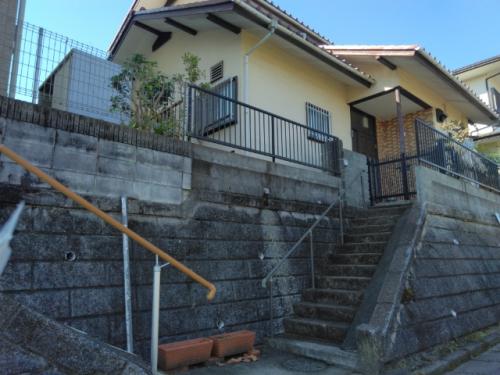


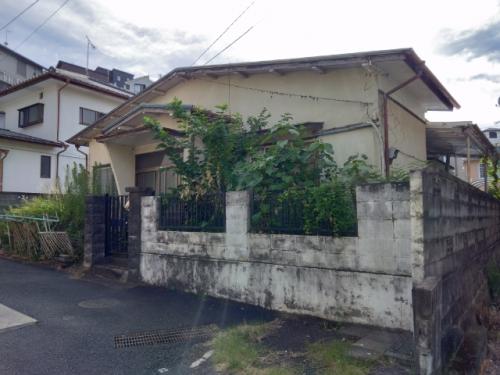


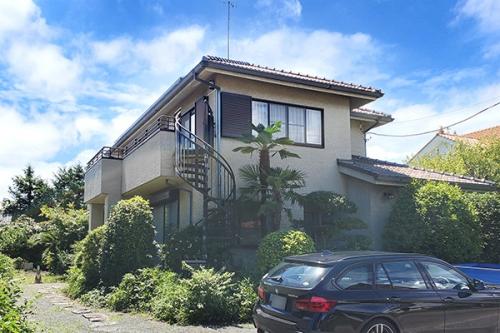
 CCN Machi-erabi is run by CCN CO., LTD. About us