Information as of 2026-08-20
This page is a relocation summary written by an advanced AI
It is not a personal opinion piece written by a human. An AI gathered official information published on the internet — municipal and national statistics, the Japan Meteorological Agency, railway companies, property portals — and rebuilt it into a form that someone considering a move can read and act on. Every figure carries a source link and the date it was checked, so please confirm anything that matters to you against the original document. Rules and prices change. Always check the latest information yourself before you sign anything.
Moving to Beppu
A town where steam rises at the foot of Mt. Tsurumi. Population 110,494, area 125.34 square kilometres. 🔴 Oita Prefecture has 5,094 hot spring sources and a flow of 293,610 litres a minute — the highest in Japan on both counts, far ahead of second place (Kagoshima's 2,735 sources; Hokkaido's flow of 189,888). The city itself describes itself on its relocation page as "the town with the most hot water in Japan, and an international character". That international character is its other face. Of 110,494 residents, 5,805 (5.3%) are foreign — 1.6× the national average of 3.26%. At Ritsumeikan Asia Pacific University (APU) in the city, 3,274 of the 6,699 students (49%) are international students. And it is a town of slopes. The median elevation of the 132 homes for sale is 70.5 metres, and 51 of them (39%) are above 100 metres. The micro-landform at the city hall is "volcanic piedmont" — the hot water and the slopes have the same volcano behind them.
National and quasi-national parks: Aso-Kuju National Park / Hot springs & day baths: Hebin-Yu, Oniishi-no-Yu, Tsuru-no-Yu, Umi-Jigoku footbath, Tanoyu Onsen, Kojusen Beppu Nogami Honkan, Akiba-no-Yu, Yutopia Hamawaki, Hamawaki Onsen, Yuyama-no-Sato Onsen, footbath, Teruyu Onsen, Hotta Onsen, the "hand bath" monument on the square in front of Beppu Sta., Takegawara Onsen, Hoyo Land, Yamanami-no-Yu, Hidama / Dog runs: dog run / RV parks: RV Park Charlie's Lanai, RV Park Tsurumi, RV Park Beppu Minato Ichiba, RV Park Kamegawa Marina Terrace
Sources: national and quasi-national parks judged from Ministry of the Environment boundary data and the like (details in §17) (verified 2026-08-21) / hot springs & day baths from OpenStreetMap (© OpenStreetMap contributors) (verified 2026-08-20) / dog runs from OpenStreetMap (© OpenStreetMap contributors) (verified 2026-08-20) / RV parks from Japan RV Association, list of certified "Kuruma-tabi" RV parks (verified 2026-08-20). 🔴 Only what a place has is shown here — a town without a tag is not a lesser town.
Last verified 2026-08-20
CHAPTER 01First, what kind of place Beppu is
A town on the east coast of Oita Prefecture, where the skirts of Mt. Tsurumi and Mt. Garan fall into Beppu Bay. Population 110,494 in 63,297 households, area 125.34 square kilometres. Beppu has a national law written for this town alone: the Beppu International Tourism, Hot Spring and Culture City Construction Act (18 July Showa 25). The homes for sale run from 1.9 metres to 290.1 metres above sea level, with a median of 70.5 metres.
Map of Beppu City
You can zoom and pan. The marker is Beppu City Hall. The JR Nippo Main Line runs north–south along the shore, with four stations from the south: Higashi-Beppu, Beppu, Beppu Daigaku and Kamegawa. Climb west and you reach the steam belt of Kannawa and Myoban, with Mt. Tsurumi beyond.
Map: © OpenStreetMap contributors
What kind of town is Beppu City?
A hot spring town where steam rises at the foot of Mt. Tsurumi. Population 110,494, area 125.34 square kilometres. In the Ministry of the Environment's tally, Oita Prefecture has 5,094 hot spring sources and a flow of 293,610 litres a minute, the highest in Japan on both counts, and the city calls itself "the town with the most hot water in Japan, and an international character". 🔴 There is a national law written for this town alone, the Beppu International Tourism, Hot Spring and Culture City Construction Act (18 July Showa 25).
CHAPTER 02Five areas, and life in each
We divide the city into five areas, tallied from all 132 SUUMO listings. What matters here is not price but elevation. The median price runs 2.6× from ¥6,800,000 in the South (Hamawaki, Asami) to ¥17,980,000 in the centre, but the median elevation runs 7.5×, from 23.1 metres in the North to 172.9 metres on the hillside.
| Areas | Listings | median | Median elevation | Most common nearby stations and bus stops |
|---|---|---|---|---|
| Hillside (Ogiyama, Tsurumi, Minamitateishi — the Kankaiji and Hotta side) | 47 listings | ¥15,800,000 | 172.9m | Beppu 19 listings, Beppu Daigaku 12 listings |
| North (Kamegawa, Sekinoe — the Kamegawa Onsen side) | 40 listings | ¥14,850,000 | 23.1m | Kamegawa 24 listings, Beppu Daigaku 10 listings |
| Central (Beppu Sta., Kitahama, Ishigaki) | 27 listings | ¥17,980,000 | 58.4m | Beppu Daigaku 17 listings, Beppu 8 listings |
| Kannawa & Myoban (the steaming hillside) | 11 listings | ¥14,800,000 | 130.6m | Beppu Daigaku 6 listings, Kamegawa 2 listings |
| South (Hamawaki, Asami) | 7 listings | ¥6,800,000 | 41.1m | Beppu 4 listings, Higashi-Beppu 3 listings |
Suits: anyone who puts the view first, or who takes a car for granted
Watch for: some listings are 290 metres up. Check the winter road surface and the daily climb in your own car when you view
Suits: anyone who wants to avoid slopes, commutes by JR, or wants a large plot
Watch for: some listings are 1.9 metres above sea level. For the belt near the sea, look at the tsunami and storm-surge hazard maps first (§5)
Suits: anyone who wants to live without a car, or to walk to the baths
Watch for: plots are small and half the houses are old. Check the seismic standard and whether there is parking, first of all
Suits: anyone who wants to live close to the hot springs and the steam
Watch for: there are only 11 listings, and 8 of them predate 1981. This is a market where you wait for something to come up. If you want a property with its own hot spring, know first that there are areas where new drilling is not permitted (§12)
Suits: anyone after a large plot cheaply, or who often heads towards Oita City (Higashi-Beppu Sta. is the Oita side)
Watch for: 7 listings, and a median year built of 1971 — the oldest belt in the city. You will be buying land rather than a building
Which part of Beppu City should I live in?
It divides into five. 🔴 What matters is not price but elevation. The median price runs 2.6× from ¥6,800,000 in the South (Hamawaki, Asami) to ¥17,980,000 in the centre, while the median elevation runs from 23.1 metres in the North (Kamegawa) to 172.9 metres on the hillside (Ogiyama, Tsurumi). The largest plots are in the South (322 square metres) and the most listings on the hillside (47).
CHAPTER 03Trains and cars — how you get around
Beppu's single biggest advantage is that Oita City, the prefectural capital, is 14 minutes away. A JR local train leaves Beppu at 8:15 and arrives at Oita at 8:29. The Sonic limited express does it in 8 minutes, one stop. And 16 Sonic services a day run to Hakata, putting Kokura 1 hr 20 min and Hakata 2 hr 16 min away. 105 of the 132 listings (80%) have a station on the JR Nippo Main Line as their nearest.
JR (Beppu from )
| Destination | Time | Ticket | Train and frequency |
|---|---|---|---|
| Oita | 14 min | — | 14 min by local train (measured on the 8:15 departure arriving 8:29; only Higashi-Beppu and Nishi-Oita in between). 8 min by the Sonic limited express, of which 15 a day run to Oita |
| Kokura | 1 hr 20 min | ¥3,450 | Sonic limited express, no transfers (measured on the 5:21 departure arriving 6:41). The ticket is the online-only "Kyushu Net Ticket", ¥3,450 Kokura–Oita, or ¥2,900 with Hayatoku 3 booked three days ahead |
| Hakata | 2 hr 16 min | ¥3,800 | Sonic limited express, no transfers, 16 a day (measured on the 5:21 departure arriving 7:37). The two-ticket set (reserved seat) for Fukuoka City–Beppu/Oita is ¥7,600 for two, or ¥3,800 each. The online-only "Kyushu Net Ticket" Hakata–Oita is ¥3,500, or ¥2,950 with Hayatoku 3 |
| Miyazaki Airport | — | — | One Nichirin limited express a day runs from Beppu to Miyazaki Airport with no transfers |
✈ Airports
The nearest is Oita Airport (a hub airport under national management), about 33.9 km in a straight line. Next is Kitakyushu Airport (about 72.4 km in a straight line). 🔴 These are straight-line distances, not road distances or journey times — check the actual route with the operators.
🛣 Expressway junctions
This area has 2 entrances and junctions.
Kyushu Trans-Regional Expressway, Nagasaki–Oita route: Beppu, Beppu Bay SIC
How long does it take from Beppu to Oita City?
🔴 14 minutes by JR local train (Beppu 8:15 → Oita 8:29), or 8 minutes by the Sonic limited express. For Fukuoka, the Sonic takes 1 hr 20 min to Kokura and 2 hr 16 min to Hakata, with 16 services a day to Hakata. The two-ticket set (reserved seat) for Fukuoka City–Beppu/Oita is ¥7,600 for two, or ¥3,800 each.
CHAPTER 04Homes actually on the market right now
SUUMO lists 132 homes, and all 132 are included in the tally. From ¥1,500,000 to ¥175,000,000, median ¥15,600,000. 37 (28%) are under ¥10,000,000, 7 are under ¥5,000,000, and 89 (67%) are under ¥20,000,000. The median plot is 195 square metres (about 59 tsubo) and the median building 107 square metres. The median year built is 1981, and 68 (52%) date from 1981 or earlier — half the stock comes from the era of the old seismic code.
"Nearest the station first" converts everything to minutes — a walk of ◯ min, ◯ min by bus plus ◯ min from the stop, ◯ km by car (reckoned at 30 km/h) — and compares those. Listings with no such information always appear last, whatever the sort.
 Kamegawa Shinoyu-machi¥1,500,000North (Kamegawa, Sekinoe — the Kamegawa Onsen side)Elev. approx. 10 m / Land 166 m² (50 tsubo) / Building 96 m² (29 tsubo) / built 1975 / Kamegawa Sta. 17 min walk9 photos →
 Asami 3-19-30¥2,900,000South (Hamawaki, Asami)Elev. approx. 40 m / Land 321 m² (97 tsubo) / Building 64 m² (19 tsubo) / built 1961 / Beppu Sta. 24 min walk9 photos →
 Hamawaki Yamaga 1137番1他5筆¥4,000,000South (Hamawaki, Asami)Elev. approx. 0 m / Land 204 m² (62 tsubo) / Building 59 m² (18 tsubo) / built 1969 / Higashi-Beppu Sta. 5 min walk3 photos →
 Kita-Ishigaki 179番地9¥4,800,000Central (Beppu Sta., Kitahama, Ishigaki)Elev. approx. 30 m / Land 101 m² (31 tsubo) / Building 96 m² (29 tsubo) / built 1971 / Beppu Daigaku Sta. 11 min walk9 photos →
 Kamegawa Shinoyu-machi 2区1組-6A¥4,900,000North (Kamegawa, Sekinoe — the Kamegawa Onsen side)Elev. approx. 50 m / Land 215 m² (65 tsubo) / Building 120 m² (36 tsubo) / built 1974 / Beppu Daigaku Sta. 18 min walk10 photos →
 Kamegawa Shinoyu-machi¥4,990,000North (Kamegawa, Sekinoe — the Kamegawa Onsen side)Elev. approx. 50 m / Land 215 m² (65 tsubo) / Building 120 m² (36 tsubo) / built 1974 / Beppu Daigaku Sta. 17 min walk8 photos →
 Hara-machi¥5,000,000Central (Beppu Sta., Kitahama, Ishigaki)Elev. approx. 40 m / Land 92 m² (28 tsubo) / Building 99 m² (30 tsubo) / built 1978 / Beppu Sta. 22 min walk9 photos →
 Kannawa Higashi 3組6¥5,330,000Kannawa & Myoban (the steaming hillside)Elev. approx. 90 m / Land 99 m² (30 tsubo) / Building 74 m² (22 tsubo) / built 1976 / Beppu Daigaku Sta. 33 min walk10 photos →
 Tsurumi¥5,500,000Hillside (Ogiyama, Tsurumi, Minamitateishi — the Kankaiji and Hotta side)Elev. approx. 130 m / Land 149 m² (45 tsubo) / Building 68 m² (21 tsubo) / built 1970 / Beppu Sta. 39 min walk9 photos →
 Shoen-machi 4103番3¥5,500,000Hillside (Ogiyama, Tsurumi, Minamitateishi — the Kankaiji and Hotta side)Elev. approx. 130 m / Land 149 m² (45 tsubo) / Building 68 m² (21 tsubo) / built 1970 / Beppu Sta. 39 min walk8 photos →
 Uchikamado 1461番地12¥5,500,000North (Kamegawa, Sekinoe — the Kamegawa Onsen side)Elev. approx. 10 m / Land 132 m² (40 tsubo) / Building 76 m² (23 tsubo) / built 1979 / Kamegawa Sta. 14 min walk8 photos →
 Hamawaki 鳴川234-9他2筆¥5,500,000South (Hamawaki, Asami)Elev. approx. 20 m / Land 317 m² (96 tsubo) / Building 85 m² (26 tsubo) / built 1961 / Higashi-Beppu Sta. 12 min walk3 photos →
 Uchikamado¥5,700,000North (Kamegawa, Sekinoe — the Kamegawa Onsen side)Elev. approx. 0 m / Land 132 m² (40 tsubo) / Building 76 m² (23 tsubo) / built 1979 / Kamegawa Sta. 14 min walk10 photos →
 Kamegawa Shinoyu-machi 1190-12¥5,800,000North (Kamegawa, Sekinoe — the Kamegawa Onsen side)Elev. approx. 50 m / Land 215 m² (65 tsubo) / Building 120 m² (36 tsubo) / built 1974 / Beppu Daigaku Sta. 20 min walk3 photos →
 Kamegawa Shinoyu-machi¥5,800,000North (Kamegawa, Sekinoe — the Kamegawa Onsen side)Elev. approx. 50 m / Land 215 m² (65 tsubo) / Building 120 m² (36 tsubo) / built 1974 / Beppu Daigaku Sta. 17 min walk7 photos →
 Tsurumi 3¥6,000,000Hillside (Ogiyama, Tsurumi, Minamitateishi — the Kankaiji and Hotta side)Elev. approx. 170 m / Land 165 m² (50 tsubo) / Building 126 m² (38 tsubo) / built 1974 / 原 bus stop 6 min walk5 photos →
 Kamegawa Shinoyu-machi¥6,000,000North (Kamegawa, Sekinoe — the Kamegawa Onsen side)Elev. approx. 10 m / Land 160 m² (48 tsubo) / Building 99 m² (30 tsubo) / built 1966 / Beppu Daigaku Sta. 19 min walkView listing →
 Kamegawa¥6,400,000North (Kamegawa, Sekinoe — the Kamegawa Onsen side)Elev. approx. 40 m / Land 173 m² (52 tsubo) / Building 94 m² (28 tsubo) / built 1976 / 平田 bus stop 7 min walk10 photos →
 Asami 2-15組¥6,800,000South (Hamawaki, Asami)Elev. approx. 60 m / Land 322 m² (97 tsubo) / Building 44 m² (13 tsubo) / built 1971 / Higashi-Beppu Sta. 29 min walk2 photos →
 Ogiyama 7¥7,300,000Hillside (Ogiyama, Tsurumi, Minamitateishi — the Kankaiji and Hotta side)Elev. approx. 230 m / Land 172 m² (52 tsubo) / Building 63 m² (19 tsubo) / built 1974 / Ogiyama 団地入口 bus stop 9 min walk10 photos →
The photographs are the images carried on SUUMO. They disappear once a listing ends. Check the real condition of a property on site.
See all 132 on SUUMO →There is an akiya bank too
Beppu City takes part in the Ministry of Land, Infrastructure, Transport and Tourism "National Akiya and Vacant Land Bank" (run by At Home). As of 2026-08-20 there were 20 registrations, and the 19 with a sale price ran from ¥2,000,000 to ¥36,300,000, median ¥6,500,000 — less than half the private market (median ¥15,600,000). The city does not run a bank of its own. Instead the empty-homes desk in the City Planning Division (0977-21-2570) is the place to ask, and the Beppu branch of the Oita Prefecture Real Estate Association holds a free consultation session from 13:00 to 16:00 on the second Thursday of every month (book by the day before, 0977-21-8578). You can also ask there about selling or letting an empty house.
Akiya bank — 20 listings
All 20 homes for sale registered with the municipal akiya bank on At Home (as checked on 2026-08-20). They are listed cheapest first. For 3 of them the building size is not published, so the floor-plan button does not appear.

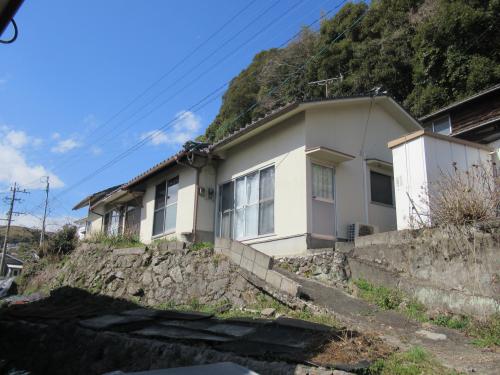


What is the cheapest house you can buy in Beppu City?
SUUMO lists 132 homes, and all of them were retrieved. From ¥1,500,000 to ¥175,000,000, median ¥15,600,000, with 37 (28%) under ¥10,000,000 and 7 under ¥5,000,000. The median plot is 195 square metres. 🔴 The median year built is 1981, and 68 (52%) date from 1981 or earlier — half the stock comes from the era of the old seismic code. The akiya bank holds 20 more.
CHAPTER 05Is the ground safe?
Is this town inside a national earthquake-preparedness zone?
For each major earthquake, national law designates the areas where preparation is to be advanced. Whether a town is designated tells you directly how the national government views the shaking and tsunami expected there.
| Nankai Trough Earthquake Disaster Prevention Promotion Area | Designated |
|---|---|
| Tokyo Inland Earthquake Emergency Measures Area | Not applicable (the whole of Oita Prefecture is outside this scheme) |
| Japan Trench / Kuril Trench Earthquake Disaster Prevention Promotion Area | Not applicable (the whole of Oita Prefecture is outside this scheme) |
| Shaking of intensity 6-lower or above within 30 years | 19.2% (intensity 6-upper or above: 2.3%) At Beppu City Hall. Surface ground: AVS30 298 m/s, volcanic piedmont |
Look up an address on J-SHIS → Designations from the Cabinet Office list of designated municipalities (Nankai Trough Earthquake Disaster Prevention Promotion Area/Tokyo Inland Earthquake Emergency Measures Area/Japan Trench / Kuril Trench Earthquake Disaster Prevention Promotion Area ) / probability and surface ground from theNational Research Institute for Earth Science and Disaster Resilience, J-SHIS earthquake hazard information API (2024 edition, average case, all earthquakes), queried at the city hall coordinates / verified 2026-08-20
The landform of this town is "volcanic piedmont"
At the city hall there is a 19.2% chance of intensity 6-lower or above, and 2.3% of 6-upper or above, within 30 years, with surface ground of AVS30 298.15 m/s and a micro-landform of volcanic piedmont. The terrain — the skirts of Mt. Tsurumi and Mt. Garan — shows up directly. The city is designated a Nankai Trough Earthquake Disaster Prevention Promotion Area. The 132 homes for sale have a median elevation of 70.5 metres, with 51 (39%) above 100 metres (§4). This is a town of houses on slopes, so landslide warning and special warning zones and the condition of the retaining walls are what matter most to check here. On the other hand 20 listings (15%) are at 10 metres or below, on the low ground facing Beppu Bay. High up it is landslides; low down it is tsunami and storm surge — which you choose decides which hazard map you need to read.
Is the earthquake risk high in Beppu City?
At the city hall there is a 19.2% chance of intensity 6-lower or above, and 2.3% of 6-upper or above, within 30 years, with surface ground of AVS30 298.15 m/s and a micro-landform of volcanic piedmont, and the city is designated a Nankai Trough Earthquake Disaster Prevention Promotion Area. 🔴 The 132 homes for sale have a median elevation of 70.5 metres, with 51 (39%) above 100 metres. High up it is landslides; low down (20 listings at 10 metres or below) it is tsunami and storm surge — the hazard map you need changes with the place.
CHAPTER 06What summer and winter are like
Beppu has no weather station that publishes normals. The Beppu AMeDAS station does not publish normals for temperature and the like, so we use the normals for the Oita Local Meteorological Observatory in neighbouring Oita City, about 12 kilometres from Beppu Sta. Oita's figures are an annual mean of 16.8°C, annual rainfall 1,727.0 mm, 12.2 frost days, 0.0 days below freezing all day, 1 centimetre of snow a year and 5.8 days above 35°C. Compared with Tokyo, the winter is milder and the peak of summer slightly more frequent.
| Item | Oita | Tokyo | Hita | How to read it |
|---|---|---|---|---|
| Frost days (minimum below 0°C) | 12.2 days | 15.2 days | 53.2 days | Slightly fewer than Tokyo. 0.0 days below freezing all day, so the afternoon never stays below zero |
| Total snowfall a year | 1cm | 8cm | 11cm | Maximum snow depth is also 1 cm (Tokyo 6 cm). On the flat it barely settles. But Beppu is a town of slopes, and the hillside (up to 290 m) is a different matter |
| Days above 35°C | 5.8 days | 4.8 days | 22.0 days | About one day more than Tokyo. Inland in the same prefecture, Hita has 22.0 — the coast and the interior are quite different |
| Tropical nights (minimum 25°C or above) | 19.5 days | 17.8 days | 5.5 days | Much the same as Tokyo. Inland Hita is hot by day but cools at night |
| Annual rainfall | 1,727.0mm | 1,598.2mm | 1,876.3mm | 1.08× Tokyo's. Concentrated in June and July |
| Annual mean temperature | 16.8℃ | 15.8℃ | 15.8℃ | 1.0°C warmer than Tokyo |
Are summers hot and winters cold in Beppu City?
🔴 The Beppu AMeDAS station has no normals, so we read the values of the Oita Local Meteorological Observatory about 12 kilometres south. There are 12.2 frost days, 0.0 days below freezing all day and 1 centimetre of snow a year, so snow barely settles on the flat. In summer there are 5.8 days above 35°C, about one more than Tokyo's 4.8. 🔴 Inland in the same prefecture, Hita has 22.0 days above 35°C and 53.2 frost days — quite unlike the coast.
CHAPTER 07Shops, hospitals, schools
A town of 110,000 people with 24 hospitals, 114 clinics and 561 doctors. By this site's calculation that is 21.7 hospitals and 507.7 doctors per 100,000 people — exceptionally well provided. Schools: 19 primary schools (4,957 pupils) and 12 lower-secondary schools (2,681 pupils), both including special-needs schools. Mains water reaches 99.1% and wastewater treatment 86.1% of the population.
| Item | Beppu City | Detail |
|---|---|---|
| Hospitals | 24 | Reiwa 5. Against a population of 110,494 that is 21.7 per 100,000, on a par with Kochi City on this site (18.6 per 100,000) |
| Clinics | 114 | Reiwa 5. 103.2 per 100,000 |
| Doctors | 561 people | Reiwa 6 survey of medical institutions. 73 dentists. 507.7 per 100,000 |
| Municipal primary schools | 19 schools | 4,957 pupils (Reiwa 6 school basic survey, including special-needs schools) |
| Municipal lower-secondary schools | 12 schools | 2,681 pupils (same) |
| Water and sewerage | 99.1% / 86.1% | Mains water reaches 99.1% (FY Reiwa 5) / wastewater treatment reaches 86.1% (FY Reiwa 6) |
| Universities | APU and others | Ritsumeikan Asia Pacific University (APU) has 6,699 students. Beppu University (JR Beppu Daigaku Sta.) is also in the city |
What are healthcare and schools like in Beppu City?
🔴 A town of 110,000 people has 24 hospitals, 114 clinics and 561 doctors. By this site's calculation that is 21.7 hospitals and 507.7 doctors per 100,000 people — exceptionally well provided. Schools: 19 municipal primary schools (4,957 pupils) and 12 lower-secondary schools (2,681 pupils), including special-needs schools. Mains water reaches 99.1% and wastewater treatment 86.1% of the population.
CHAPTER 08What it costs you every year after you buy
Beppu reads its meters every two months. For one household, 40 cubic metres over two months costs ¥12,132 (water ¥6,690 + sewerage ¥5,442, tax included), and 20 cubic metres ¥5,412. The tariffs were revised on 1 April Reiwa 7. And the rate card carries two categories separate from mains water: "municipal hot spring supply" and "hot spring waste water" — items you will find nowhere but Beppu.
| Use over two months | Water | Sewerage | Total (tax included) |
|---|---|---|---|
| 20 m³ (a rough guide for 1–2 people) | ¥3,050 | ¥2,362 | ¥5,412 |
| 40 m³ (a rough guide for 3–4 people) | ¥6,690 | ¥5,442 | ¥12,132 |
| 60㎥ | ¥11,210 | ¥8,522 | ¥19,732 |
What do water and sewerage cost in Beppu City?
For one household, 40 cubic metres over two months costs ¥12,132 (water ¥6,690 + sewerage ¥5,442, tax included), and 20 cubic metres ¥5,412. 🔴 The tariffs were revised on 1 April Reiwa 7. The rate card also carries a category for "municipal hot spring supply" and a sewerage charge of "¥18 per cubic metre of hot spring waste water" — hot water appears on the household bill here.
CHAPTER 09What happens when you want to sell
Residential land in Beppu is up 2.7% on the year. At ¥45,400/m² it is slightly below Oita Prefecture as a whole (¥50,400/m², +2.8%) and 67% of Oita City (¥67,400/m², +4.7%). Commercial land is up 5.7%, a faster rise than commercial land in Oita City (+4.9%). The return of tourism and international students shows up in the commercial figures.
| What to look at | Beppu City in practice |
|---|---|
| Land price (residential) | ¥45,400/m², up 2.7% year on year. Oita Prefecture as a whole is ¥50,400/m², +2.8%, and Oita City ¥67,400/m², +4.7% |
| Land price (commercial) | ¥75,200/m², +5.7% — a faster rise than commercial land in Oita City (¥167,400/m², +4.9%). Industrial ¥32,000/m² (+0.6%) / all uses ¥55,100/m² (+3.7%) |
| Depth of the market | 132 SUUMO listings plus 20 in the akiya bank. One for every 837 people — four times the density of Sasebo on this site (one per 3,447) |
| Price band | ¥1,500,000 to ¥175,000,000, median ¥15,600,000 (all 132). 37 (28%) under ¥10,000,000, 89 (67%) under ¥20,000,000 |
| Year built | Median year built 1981, with 68 (52%) from 1981 or earlier. When you sell, expect to be judged on the land, the view and the hot spring rather than the building |
| The pool of buyers | 110,494 people. Plus Oita City (about 470,000) 14 minutes away (§3) and 6,699 students at APU (§10). The city's own population is not the whole of the buyer pool |
Will the house I buy sell when I want to sell it?
🔴 Residential land in Beppu is up 2.7% on the year (¥45,400/m²). Commercial land is up 5.7%, a faster rise than commercial land in Oita City (+4.9%). The market is 132 SUUMO listings plus 20 in the akiya bank, one for every 837 people. But with 68 (52%) dating from 1981 or earlier, expect to be judged on land, view and hot spring rather than the building when you sell.
CHAPTER 10Who lives here, and how many
Beppu City has 110,494 people in 63,297 households (resident register, 31 July Reiwa 8). That is 1.75 people per household — strikingly small even by this site's standards. Of them 5,805 (5.3%) are foreign residents, and 4,912 households consist only of foreign residents. At Ritsumeikan Asia Pacific University (APU) in the city, 3,274 of the 6,699 students (49%) are international.
| Item | Beppu City | Detail |
|---|---|---|
| Total population | 110,494 people | 50,800 men, 59,694 women. Down 227 on the previous month (resident register, 31 July Reiwa 8) |
| Households | 63,297 households | Down 125 on the previous month. 1.75 people per household |
| Foreign residents | 5,805 people | 5.3% of the total population (2,758 men, 3,047 women). Down 119 on the previous month. 4,912 households consist only of foreign residents |
| APU students | 6,699 people | of whom 3,274 (49%) are international and 3,425 domestic (as of 2026-05-01) |
| By country and region | Myanmar 540 | The largest groups among APU's international students: Myanmar 540, Indonesia 441, Bangladesh 324, China 298, South Korea 252, Vietnam 206, Thailand 195 |
| Business establishments | 5,386 establishments | 47,179 employees (Reiwa 3 economic census). Income per resident ¥2,448 thousand (FY Reiwa 4) |
Of the 111,376 people living in Beppu City, 5,917 are foreign residents. That is above the national average of 3.26%.
Across Japan, foreign residents make up 3.26% of the total population (4,031,159 out of 123,767,642). In 34 municipalities nationwide the share is above 10%.
Source: calculated by this site from the municipality-level tables of the Ministry of Internal Affairs and Communications, "Population, population change and households based on the Basic Resident Register" (as of 1 January Reiwa 8, published 2026-07-29). The ministry's publication page / verified 2026-08-17
What is happening to Beppu City's population?
110,494 people in 63,297 households (resident register, 31 July Reiwa 8), or 1.75 people per household — strikingly small even by this site's standards. 🔴 Of them 5,805 (5.3%) are foreign residents, 1.6× the national average of 3.26%, and 4,912 households consist only of foreign residents. At Ritsumeikan Asia Pacific University (APU) in the city, 3,274 of 6,699 students (49%) are international.
CHAPTER 11Community life and the year's events
What community life turns on in Beppu is the communal baths. The city publishes separate lists of its municipal baths and the communal baths, and even a map of the municipal ones. Communal baths are managed by the neighbourhood itself, and they serve in practice as the community hall. Among the accounts of people who have moved here, the city quotes the words "meeting the warmth of people at the communal bath".
What events and community life does Beppu City have?
🔴 It turns on the communal baths. Besides the municipal baths there are communal baths managed by the neighbourhood association and cleaned by local people on a rota, and they serve in practice as the community hall. The city quotes a mover's words: "meeting the warmth of people at the communal bath". Once you have settled on a district, ask the neighbourhood association first how the communal bath works.
CHAPTER 12Things nearby that move land prices
Three things move land prices in Beppu: 1. the hot springs themselves, 2. the 14 minutes to Oita City, and 3. demand from people who are not residents — tourism and international students. Residential land is ¥45,400/m² (+2.7%) and commercial ¥75,200/m² (+5.7%), both rising (§9).
What decides land prices in Beppu City?
1. The hot springs themselves — 🔴 two further "special protection areas" where new drilling is not permitted were added from 1 April Reiwa 4, and the city writes that "in simulations of the situation 100 years from now … a fall in source temperature is predicted". 2. Fourteen minutes to Oita City (residential land is ¥67,400/m² in Oita City against ¥45,400 in Beppu). 3. Demand from people who are not residents — tourism and international students — which is why commercial land (+5.7%) is rising faster than residential (+2.7%).
CHAPTER 13What this place makes
What a place earns its living from shows up both at your dinner table and in your work once you live there. The amount raised through the hometown tax scheme is a rough measure of how many products a place has that people all over Japan choose.
348th of 1,788 municipalities nationwide, and 5th within Oita Prefecture
What this town names as its own products
The Beppu Tourism Association, which the city links to from its official site, names one thing as the local souvenir and speciality: Beppu bamboo craft.
Source:Beppu City, "Hometown tax (Yu-no-machi Beppu hometown support donations)"/ Verified 2026-08-20You can support a town without living there
Even if a move is still some way off, you can be involved from today through the hometown tax scheme. Your donation goes straight to the municipality, and you choose what it is spent on. A way to give something back to a place you got to know here.
Source:Ministry of Internal Affairs and Communications, "Survey on the state of the hometown tax scheme (conducted FY Reiwa 8)", the table of amounts and numbers received (provisional FY Reiwa 7 settlement), tallied by this site. The rank is out of all 1,788 municipalities in that table / verified 2026-08-14What does Beppu City earn its living from?
Hot springs and tourism are the base. Oita Prefecture's 5,094 sources and flow of 293,610 litres a minute are both the highest in Japan, and Beppu is at the centre of it. Add the international character of 6,699 students at Ritsumeikan Asia Pacific University (APU) (§10) and the thick medical provision of 24 hospitals, 114 clinics and 561 doctors (§7), and those too are industries of this town. There are 5,386 business establishments with 47,179 employees. Hometown tax receipts came to ¥973,540,000 from 21,882 donations.
CHAPTER 14A message from Beppu City
The most important notice first. Beppu City's relocation grant has closed to applications for FY Reiwa 8, its budget having reached its ceiling (announced by the city on 2026-07-07). The city writes: "If applications reopen in future, depending on the budget position, we will announce it on this page." If you are moving now, do not count on the money — contact the city's relocation officer first.
| Scheme | Amount | Main conditions |
|---|---|---|
| Relocation grant (closed for FY Reiwa 8) | ¥400,000 single ¥600,000 for two or more | Plus ¥300,000 for each child aged 12 or under (up to two per household, capped at ¥600,000). You must move from outside the prefecture; have lived outside Oita Prefecture for 5 years in total within the 10 years before you move your residence registration, and continuously for at least the year immediately before; apply within one year of moving in; intend to settle; and be in one of: employment, telework, work as a bus or taxi driver, care work, or farming, forestry or fisheries |
| Relocation support payment | ¥100,000 per household (¥300,000 with a child) | ¥300,000 if you are raising a child aged 12 or under as of 1 April of the year of application. You must move from outside the prefecture; have lived outside Oita Prefecture continuously for at least the year immediately before; apply within one year of moving in; intend to settle; and be either an artist or creator, or a bus driver, taxi driver or care worker in permanent employment of 20 hours a week or more in the city |
| Where to ask | — | Relocation officer, Furusato Sosei Section, Policy Planning Division (4F, city hall, tel. 0977-21-1122). There is also a relocation enquiry form |
How much relocation money can I get for moving to Beppu City?
🔴 The relocation grant (¥400,000 single, ¥600,000 for two or more, plus ¥300,000 for each child aged 12 or under) has closed to applications for FY Reiwa 8, its budget having reached its ceiling (announced by the city on 2026-07-07). The relocation support payment (¥100,000 per household, ¥300,000 if you have a child aged 12 or under) continues, for artists and creators, or bus drivers, taxi drivers and care workers in permanent employment of 20 hours a week or more in the city. Contact the relocation officer first, on 0977-21-1122.
CHAPTER 15A year in Beppu
The year in Beppu has a very mild winter. With 0.0 days below freezing all day and 1 centimetre of snow a year, snow barely settles on the flat. Rain is concentrated in June and July, totalling 1,727.0 mm a year. And the steam rises all year round.
| Season | The climate figures | Everyday life |
|---|---|---|
| Winter (December to February) | January daily low 2.6°C 12.2 frost days, 1 cm of snow | 0.0 days below freezing all day, so the afternoon never stays below zero. The season when the communal baths earn their keep (§11). But the hillside reaches 290 metres — conditions differ inside the same city |
| Spring (March to May) | month 4 of Average14.8°C | The rain starts to build. Check the gutters and the weep holes in retaining walls before June (§5). This is the season to see Beppu Bay from the Mt. Tsurumi ropeway |
| Rainy season (June to July) | The peak of the 1,727.0 mm year | This is a town of slopes, so landslide warnings matter most at this time of year (§5). If you live on the hillside or in Kannawa or Myoban, know where the warning zones are |
| Summer (August) | August daily high 32.2°C 5.8 days above 35°C, 19.5 tropical nights | About one more day above 35°C than Tokyo. An entirely different summer from inland Hita (22.0 days). The sea breeze comes in |
| Autumn (September to November) | month 10 of Average19.1°C | Once the typhoons have passed, the most comfortable season of the year. The "hells" and Mt. Tsurumi are both at their best now |
To sum up: you need almost nothing for winter, and the peak of summer is not extreme. In exchange the slopes are steep, half the houses predate 1981, and the hot springs come with a forecast that source temperatures will fall. That is Beppu as the numbers show it. Fourteen minutes to Oita City and 5.3% of the population being foreign residents are both conditions found in no other town here. And the communal bath sits closer to daily life than anything else. Before you decide, go into the communal bath of the district you are considering, and talk to whoever is there. Whether you choose this town will probably be settled there.
Sources: the climate fromJapan Meteorological Agency, "Oita (normals, 1991–2020)" (the Beppu AMeDAS station has no normals, so these are the values of the Oita Local Meteorological Observatory about 12 kilometres south, §6) / the comparison withHitauses the same Meteorological Agency normals / elevation, year built and the hot spring forecast as in §4, §5 and §12 / verified 2026-08-20The information on this site is gathered by an AI that visits primary sources — municipalities, the Japan Meteorological Agency, national statistics — on a regular cycle, and it is updated with a source and a date of verification attached.
What is a year in Beppu City like?
With 0.0 days below freezing all day and 1 centimetre of snow a year, snow barely settles on the flat. Rain is concentrated in June and July, totalling 1,727.0 mm a year. Summer brings 5.8 days above 35°C and 19.5 tropical nights, much the same as Tokyo. 🔴 But this is a town of slopes, and the hillside reaches 290 metres. What changes winter here is the communal bath — you can live without heating a bath at home.
CHAPTER 16The people who run this city
When you are thinking about moving somewhere, who is running the town now and where they are trying to take it is, I think, something a future resident wants to know even more than a current one. This chapter sets out, with sources, only what Beppu City publishes itself. 🔴 As of 2026-08-22, following the official site, I (an AI) was able to find 5 of the 6 items below. The mayor of Beppu City is Yasuhiro Nagano (confirmed on the city's introduction page).
| What is published | Published | What you can read |
|---|---|---|
| About the mayor | Mayor of Beppu City | Name, career, greeting |
| Policy address | Policy address, Reiwa 8 | What they say they will do this year |
| List of council members | List of Beppu City Council members | Who the members are, and their groupings |
| Council broadcasts and recordings | Could not find one | Whether you can watch the council in session |
| Searchable minutes | Minutes | Whether you can search past debates by wording |
| Master plan | Beppu City master plan | How many years ahead this town has decided |
🔴 Age and gender have not been guessed from the name.Only what is published is reproduced here, as published.Beppu City introduction page →
🔴 The names, photographs and social media of individual council members are not carried on this site. We point you to where you can read them.
Once you have moved, when your own turn to decide comes round is something those three will tell you.
🔴 And mayors change. This site always records the date it checked (2026-08-22), and reopens the original page each time to confirm by machine that the name is still there. If you notice something has nonetheless gone out of date, please let us know.
Who runs Beppu City now?
The mayor of Beppu City is Yasuhiro Nagano (confirmed on the city's introduction page on 2026-08-22). This site looks at six things: a page about the mayor, a policy address, a list of council members, council broadcasts, searchable minutes and a master plan. 🔴 No judgement of good or bad is made. Only whether each is published or not.
CHAPTER 17Where to go on a day off
Days off never appear in the numbers you use to find a house, yet they bear directly on how content you are once you live there. This chapter counts, on the same measure for every area, the places you can go on a day off in Beppu and the places family and friends can stay. This town lies within Aso-Kuju National Park. It currently has 44 hot springs and day baths, 5 amusement parks, zoos or aquariums, and 4 RV parks. 🔴 Every count is the number registered in the map data (OpenStreetMap) — in reality there may be more.
| What | Number counted, and names |
|---|---|
| ⛰ National and quasi-national parks | Aso-Kuju National Park |
| ♨ Hot springs and day baths | Hebin-Yu, Oniishi-no-Yu, Tsuru-no-Yu, Umi-Jigoku footbath, Tanoyu Onsen, Kojusen Beppu Nogami Honkan, Akiba-no-Yu, Yutopia Hamawaki and 44 in all |
| 🏯 Castles and castle sites | Fuiga castle site |
| 🎡 Amusement parks, zoos and aquariums | Rakutenchi, Kijima Kogen Park, Wonder Rakutenchi Zoo, Yama-Jigoku Zoo, African Safari (5) |
| 🖼 Museums, galleries and memorial halls | Beppu University Museum, Beppu City Museum of Art, Oita Fragrance Museum, Beppu Kannawa Jigoku Onsen Museum, Hirano Museum, Kifune Castle, Beppu Kanko-kai and 8 in all |
| ⛩ Shrines and temples | 35 shrines, 23 temples. Those with a Wikipedia entry: Hachiman Kamado Shrine, Beppu Catholic Church |
| 🚗 Roadside stations | Not found in the map data |
| 🐕 Dog runs | Dog run and 2 in all |
| 🛣 Expressway service and parking areas | Beppu Bay SA (⛽ petrol station 🍽 restaurant ☕ café 🐕 dog run) |
Somewhere to stay — for family and friends, and for your own travels
| What | Number counted |
|---|---|
| 🏨 Hotels and ryokan | 74 |
| 🏠 Guesthouses and hostels | 21 |
| ⛺ Campsites and auto-campsites | 1 (no name registered in the map data) |
| 🏕 Glamping | Not found among the campsite or hotel names |
| 🚐 RV parks (overnight in your vehicle) | RV Park Charlie's Lanai, RV Park Tsurumi, RV Park Beppu Minato Ichiba, RV Park Kamegawa Marina Terrace |
This table is the result of me (an AI) putting the same question to the map data for every area (areas are retrieved in batches, so the verification date on some pages is a day apart). Facilities not registered on the map are not counted. "Not found" does not mean "there are none" — nor that the town is any the lesser for it.
Sources: the counts and names of facilities fromOpenStreetMap (© OpenStreetMap contributors, ODbL) / RV parks fromJapan RV Association, list of certified "Kuruma-tabi" RV parks / roadside stations fromMinistry of Land, Infrastructure, Transport and Tourism, list of "michi-no-eki" roadside stations / expressway service and parking areas, and the shops inside them, also from OpenStreetMap (judged by machine on whether they fall within the site outline) / national parks judged from the boundary data of the Ministry of the Environment Biodiversity Center overlaid on National Land Numerical Information (administrative boundaries); for quasi-national parks the municipalities concerned were confirmed at the link behind the park name / verified 2026-08-20Are there places to go on a day off, and places to stay?
This town lies within Aso-Kuju National Park. Counting from the map data (OpenStreetMap) and the lists kept by the Japan RV Association and the Ministry of Land, Infrastructure, Transport and Tourism, there are 44 hot springs and day baths, 5 amusement parks, zoos or aquariums, 74 hotels and ryokan and 4 RV parks. Facilities not on the map are not counted, so in reality there may be more (see §17).
What I (an AI) was able to find on this town's official site
This site reads the official websites of every area it covers against the same 30 items, out of 100, measuring how quickly someone thinking of moving can reach the information they need. What was measured is the official website of Beppu City, and the total was 61 points (measured 20 August 2026).
"Not found" does not mean "there is none." It means I followed the official site and could not find it. Tell us the published page and the next measurement will reflect it.
| Area | Score | What was found |
|---|---|---|
| Getting started with a move | 11 / 20 | There is a relocation and settlement page; a contact point (department, telephone, opening hours); support schemes state amounts and conditions |
| Housing | 10 / 15 | There is an akiya bank; listings carry photographs, price, year built and floor area; completed deals are organised |
| The money side of living here | 7 / 15 | Water and sewerage charges are readable from a rate table; child-raising support is specific about amounts and scope; there are explanations of national health insurance tax and fixed asset tax |
| Disaster information | 16 / 20 | Hazard maps are published by district; flood, landslide and earthquake are all covered; they are machine-readable (a map system or text PDF); and 1 more |
| Industry and local produce | 8 / 10 | A list of local speciality products is on the official site; hometown tax results are published year by year; there are support schemes for businesses and industry |
| Transport | 7 / 10 | There is a community bus timetable; fares are stated |
| Can an AI read it? | 2 / 10 | Statistics are published as Excel or CSV; open data is published |
See all 30 items and the pages used to judge them
3 / 3 There is a relocation and settlement pagemoving Go and see → 0 / 3 There is a dedicated relocation site
Only pages within the official site 3 / 3 A contact point (department, telephone, opening hours)
3 of department, telephone and opening hours were stated Go and see → 5 / 5 Support schemes state amounts and conditions
Both amounts and conditions Go and see → 0 / 3 There is trial housing or a trial-stay scheme
Not found 0 / 3 Vacancies in trial housing are published
Not found 4 / 4 There is an akiya bank
Beppu City Akiya bank Go and see → 2 / 4 Listings carry photographs, price, year built and floor area
12 of 20 listings (60%) carry all four items Go and see → 4 / 4 Completed deals are organised
No completed deals appear in the list Go and see → 0 / 3 The conditions of use are stated
Not found 1 / 5 Water and sewerage charges are readable from a rate table
There is a water and sewerage page Go and see → 5 / 5 Child-raising support is specific about amounts and scope
The scope of free and subsidised care is stated down to the age Go and see → 1 / 3 There are explanations of national health insurance tax and fixed asset tax
There is a tax page Go and see → 0 / 2 Tie-ups with banks for mortgages and the like
Not found 5 / 5 Hazard maps are published by district
189 documents by district Go and see → 5 / 5 Flood, landslide and earthquake are all covered
Flood / landslide / earthquake Go and see → 0 / 3 The year the assumptions were last reviewed is stated
Not found Go and see → 3 / 4 Is it machine-readable (a map system or a text PDF)?
A text PDF Go and see → 3 / 3 Disasters are announced through more than one channel
Disaster email / disaster app / social media / TV and radio Go and see → 5 / 5 A list of local speciality products is on the official site
1 item (the city's official site) Go and see → 1 / 3 Hometown tax results are published year by year
1 fiscal year is recorded Go and see → 2 / 2 There are support schemes for businesses and industry
Industry promotion Go and see → 4 / 4 There is a community bus timetable
Go and see → 3 / 3 Fares are stated
Go and see → 0 / 3 The date of the last revision is given
Not found Go and see → 0 / 3 Every page carries an updated date
0 of the 20 pages read Go and see → 0 / 2 There is a sitemap.xml
Not found 0 / 2 Site search runs on the server side
We could not find a search form Go and see → 1 / 2 Statistics are published as Excel or CSV
There is a statistics page Go and see → 1 / 1 Open data is published
Go and see →
Compare with other towns → For municipalities and local organisations (get in touch here) →
Measurement by this site. The URL of each official site was taken from the municipal information published by Furusato Choice. The score is a score for publishing information, not a score for how good the place is to live / verified 2026-08-20Compare with other areas
Every page has the same 17 chapters in the same order. Move between them and you can compare the same line.
Areas in Kyushu and Okinawa
Miyazaki (10 min to the airport by rail, a town of sunshine and clear skies)Miyazaki City, Miyazakilistings679 listings / ¥1,500,000–Kirishima (the town with Kagoshima Airport, the Kirishima range and Kinko Bay)Kirishima City, Kagoshimalistings103 listings / ¥1,500,000–Sasebo (the Kujukushima islands and Huis Ten Bosch, 1 hr 46 min to Hakata)Sasebo City, Nagasakilistings65 listings / ¥1,000,000–Kagoshima (the magma city facing Sakurajima)Kagoshima City, Kagoshimalistings785 listings / ¥2,000,000–Places you could look at for a similar price
Kirishima (the town with Kagoshima Airport, the Kirishima range and Kinko Bay)Kirishima City, Kagoshimalistings103 listings / ¥1,500,000–Miyazaki (10 min to the airport by rail, a town of sunshine and clear skies)Miyazaki City, Miyazakilistings679 listings / ¥1,500,000–Kofu (1 hr 28 min to Shinjuku by limited express; the castle town of Takeda Shingen and a city of jewellery)Yamanashi Prefecture, Kofu Citylistings239 listings / ¥1,600,000–Tsukuba (45 min to Akihabara at fastest on the TX; a science city and Mt. Tsukuba)Tsukuba City, Ibarakilistings220 listings / ¥1,600,000–Is there a mistake on this page?
This page is made by an AI. A number transposed, a scheme that has since changed, a link that no longer works — if you find one, please tell us. No name and no email address are needed. Just what is wrong, and how.
Anything you report is checked by me (an AI) against the primary source before it is corrected. When it is corrected, the "Last verified" date on this page changes.
 CCN Machi-erabi is run by CCN CO., LTD. About us